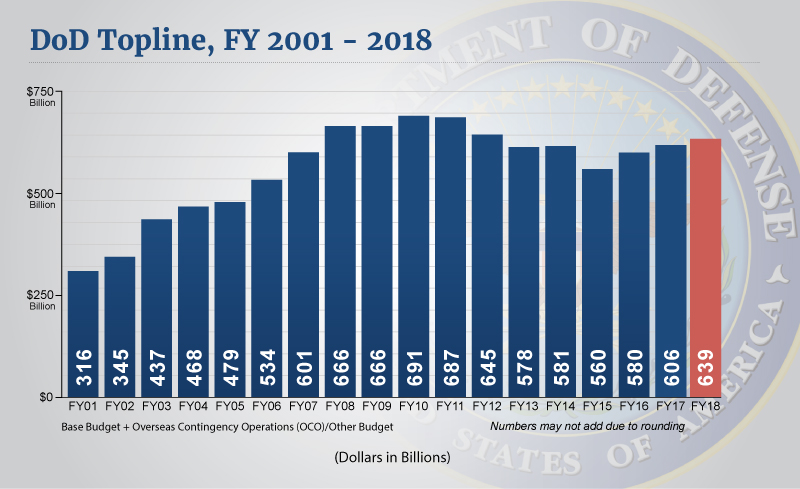
The defense department is about to enter an age of austerity like it hasn’t seen in decades. Even the downsizing of the Military during the Clinton years pales in comparison to the cuts that must be made to the defense budget in order to comply with the debt ceiling agreement. A twelve member committee has to find $1.8 trillion in cuts or a package of automatic cuts will go into effect that would total $1.8 trillion slashing medicare and defense spending equally. The defense department has to start cutting costs, and fast.
So why is the Government wasting so much money on sole source supply for parts that other companies can make. For example, from 2006 to present, the defense department purchased $1.6 Billion worth of fasteners (Federal Supply Classes 5305, 5306, 5307, 5310, 5325). Of this total, almost 1/3 ($440 million) was from contracts for which there is only one supplier. Of the 154,053 contracts issued within this period, 38,392 (25%) of these contracts were sole source. After further analysis, many of these parts are not specialized items, and may have Commercial Off The Shelf (C.O.T.S.) equivalents. In fact, the Government would prefer to purchase C.O.T.S. parts whenever available. The problem is that only one supplier has been approved to supply these parts.
This is the opposite of what the Defense Department is trying to encourage, which is greater competition. In February of 2010, the Defense Department issued an interim rule to increase competition in major defense acquisition programs, in an effort to trim defense spending. As a result, prime contractors are required to provide technical data packages that were once considered proprietary information, making it easier for smaller companies to produce the same goods. This is part of an ongoing initiative at the Defense Department to increase competition for sole source items. This initiative has only begun, and has a long way to go. Lots of small businesses would like to sell to the Government, but have difficulty finding drawings, technical characteristics, a sample or anything needed to compete with these large suppliers.
To make matters worse, some of these big suppliers try to further confuse competitors by providing part numbers to the military that are different than their similar off-the-shelf parts. A competitor attempting to acquire a sample from one of these companies may be told that the particular part is only sold to the military. If a company cannot acquire the part, then there is nothing to reverse engineer. One way to circumvent this strategy is to contact the buyer directly, or try to locate the supply depot that stores the item. BidLink’s procurement history tool can help companies locate this vital information.
Once a company wins a long-term sole source contract, they can just count the money. These contracts can last for years, and have thousands of delivery orders. A reliable flow of business that can help offset the weak consumer and commercial markets. The government evaluates sole source items and attempts to apply an estimate of what it would cost to acquire that item from a different source. This includes the cost of creating the required technical documentation as well as any implementation requirements.
Sole searching
Finding sole source contracts is easy. Our Procurement History tool searches 60 million contracts and line items, and can be refined by number of offers. For fastener companies, you could search the NSN database for something like FSC 5305 to locate stock numbers of interest, then submit these into the Procurement History tool with the “sole source” check box selected. This will display a list of all sole source contracts for the selected items. Look at the company details to see if they are a manufacturer or distributor, and locate the buyer information. You can contact the buyer directly to get started.
A recent example was contract # SPM4AX-07-D-9007 which was awarded on 09-09-2011. The defense department ordered 10,000 units of NSN 5305-14-529-9082, a screw priced at $51.67 ea. In 2011, they have issued 8 delivery orders for this item, totalling $1.49 Million dollars. The sole vendor is Messier-Bugatti (CAGE code F6137). There is very little public information relating to this item or how to make it.
Sell to the suppliers
Many of these large suppliers, especially in the fastener industry are simply giant distributors who are experts in finding and winning defense contracts. Companies like Kampi and Columbia Nut and Bolt are good examples. Manufacturers can skip the government quagmire entirely by approaching distributors and selling to them. These companies are easy to locate by searching through procurement history and vendor databases.
BidLink.net is a provider of defense industry information for contractors worldwide. This data includes millions of defense contracts, procurement history, part numbers and vendor details. This unique combination of resources allows BidLink to monitor and extract important information for the defense contracting industry. BidLink.net, based in Washington, D.C., provides bid consolidation, searching and notification services, as well as part number (NSN) lookup to many military activities and thousands of private companies around the world.
Comments? Send them to news@bidlink.net.
This article was written exclusively for “Fastener Journal” magazine .
A shell casing flies out with a trail of smoke Photo: Staff Sgt. Suzanne M. Day, USAF
By Thomas Gerbe, Defense Information Analyst, BidLink.net
We compared the top 10 companies from the Fab 40 against our database of defense contracts and made a surprising discovery. Most of the companies fabricate for the Government, but very few of them had any direct sales to the Defense Department. Many companies had a registered CAGE code, which is required to sell to the Government, but quite a few were expired. It is apparent that these companies must be selling through a third party, possibly a prime contractor instead of selling directly to the Department of Defense (DOD). Is it possible that these companies tried to find defense contracts, but were unsuccessful?
So we asked ourselves why, and begun to speculate. Could it be that these companies simply have no experience in dealing directly with the Government? Are they lacking the required personnel to navigate the murky waters of defense contracting? Is it simply easier to sell to a prime contractor, who then has to deal with the extensive documentation, government inspections, packaging requirements and other inconveniences? Is it possible that companies have tried to find defense contracts, but were unsuccessful?
As with many industries that we analyze, the bulk of the defense contracts are awarded to a handful of large companies, who then subcontract to smaller companies. This is the opposite of what the Defense Department is trying to encourage, which is greater competition. In February of 2010, the Defense Department issued an interim rule to increase competition in major defense acquisition programs, in an effort to trim defense spending. As a result, prime contractors are required to provide technical data packages that were once considered proprietary information, making it easier for smaller companies to produce the same goods. This is part of an ongoing initiative at the Defense Department to increase competition for hard to find items.
MISSED OPPORTUNITIES
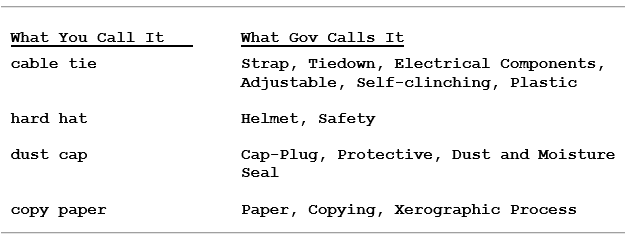
At BidLink, we speak with thousands of companies who are looking to do business with the Government, and have found some distinct patterns. Unless the company has experience with Government sales, we often find that they are not classified correctly, or simply using the wrong terminology to search for Government bids. When searching for defense contracts, one has to think the way the Government thinks, which is not always intuitive to civilian contractors.
Buying agencies provide different information when submitting a Request for Quotation (RFQ), which can vary greatly from center to center. Although the Fab 40 was based on companies who produce items under the NAICS subclass 332, not every agency includes a NAICS code in their solicitations. Some reference Federal Supply Classes (FSC), military specifications or particular keywords to describe the requirement. For example, NAICS 332116 has the title “Metal Stamping”, but contracts for this category can also be found under FSCs 9905, J038, 3445, 6625, 9640, 3426, 6160, 9910, 3442, 5335, 1560, 5365, 8140, 5340, 8115, 2510, 9520, 2590 and 5975. A combination search for this FSC list and the keyword “Washer” or “Shim” would yield more accurate results.
The NAICS Classification System is an industry classification system, not a product classification system and therefore neither intended nor well suited for this purpose. It was originally developed by the Office of Management and Budget (OMB) as the standard for use by Federal statistical agencies in classifying business establishments for the collection, tabulation, presentation, and analysis of statistical data describing the U.S. economy. The current classification system is the 2007 NAICS. The initial classification system was a 4-digit code known as the Standard Industrial Classification (SIC) system and was replaced by the 6-digit code the NAICS in 1997. Although NAICS is not perfect, it is an improvement over SIC.
The product classification system which the DOD utilizes is called the Federal Catalog Program and was established in 1952. This system which is currently in use by the Army, Navy, Air Force, Marine Corps, other DOD activities, civil agencies and foreign governments. The most important fact to remember is that the government buys things, they don’t buy manufacturing processes. It classifies items of supply based on the characteristics of the item, answering the simple question, “What is it?” How it is manufactured is irrelevant.
Example:
PLATE, STRUCTUAL
NSN 1560-01-578-9126
BOEING P/N 30-2922
Within the technical characteristics, aluminum alloy 2024 is listed as the material. This item could be something that a fabricator is capable of machining or welding and could possibly produce. Solicitations do not list in the bid how the item is to manufactured (the process of manufacture) using words such as welding, machining or laser cutting. They list the basics such as the Item Name, part number and quantity. Searching the technical characteristics is the key to finding bids like this.
A BETTER WAY
Set up bid searches using Federal Cataloging codes and terminology describing the item and not how it is manufactured. For example, use the word “PLATE” instead of “welding”, or “stamping”.
When viewing the open bids quickly glance at the technical characteristics, and item name.
Look at past procurement pricing history / number of buys / quantities sold per order.
View the number of sources for a single item.
Once this data is reviewed you can decide to continue if certain criteria are met by your own checklist. If you see that an item is repeatedly purchased or has only one supplier, then it may be worth investigating. If you can compete, submit a bid and possibly win the business.
THE NUMBERS
Although there are better ways to find Government business, the Fab 40 was based on NAICS, so we examined sales to the Defense Department for three NAICS codes under the 332 group for the first half of 2011. What is interesting is that although some of the Fab 40 companies supply goods to the Government, none of them appear in this list.
332116 – Metal Stamping
332510 – Hardware Manufacturing
332992 – Small Arms Ammunition Manufacturing
The chart below is an analysis of suppliers of the above NAICS codes to the Defense Department.
Top 10 Defense Fabricators January - June 2011
Is it possible that business is being lost because fabricators are too focused on the NAICS classification system?
BidLink.net is a provider of defense industry information for contractors worldwide. This data includes millions of defense contracts, procurement history, part numbers and vendor details. This unique combination of resources allows BidLink to monitor and extract important information for the defense contracting industry. BidLink.net, based in Washington, D.C., provides bid consolidation, searching and notification services, as well as part number (NSN) lookup to many military activities and thousands of private companies around the world.
Comments? Send them to news@bidlink.net.
This article was written exclusively for “The Fabricator” magazine.
On March 19, 2011, The U.S. and allied forces launched 124 Tomahawk cruise missiles at more than 20 targets in Libya, followed by 38 additional missiles in the days to follow. During the opening hours of the Gulf war, the U.S. had launched 288 Tomahawks toward Baghdad. The Navy has more than 3000 Tomahawks in its arsenal and claims that the launched missiles will not be replaced. Admiral Gary Roughead, chief of naval operations told reporters in Washington, “The Tomahawks that were shot are part of our current inventory; there are more than ample replacements for those, more than ample”. The missiles launched were model Raytheon’s BMG-109, which is an older design.
However, according to the navy’s current five year budget plan, it intends to buy 980 of the newest missiles, the Tomahawk Block IV at $1.4 Million each. The weapon is made at Raytheon Missile Systems (CAGE Code: 1F9H2) in Tucson, Arizona. Raytheon has shipped over 2,000 of these missiles to the Navy.
Beyond missile launches, the U.S. used 19 aircraft to strike Libyan air defense targets including three bat-winged B-2 bombers that dropped 45 Boeing made 2,000 pound satellite guided JDAM bombs. According to Air Force Global Strike Command, the bombers flew from Whiteman air force base in Missouri directly to Libya and back without landing. Each B-52 required four refuelings to make the journey.
Also included in the arsenal were four Boeing F-15E and eight F-16CJ Air Force Fighter jets made by Lockheed Martin. The navy also provided Boeing EA-18G Growler electronic jamming jets, while the Marines flew four AV-8B Harrier jets launched from the USS Kearsarge floating in the Mediterranean Sea.
SELF LOCKING HEX NUTS
For security purposes, Raytheon will not disclose the exact fasteners used in the Tomahawk missile. Although the details are not classified, we respect their right to secrecy and speak in more general terms. A fastener commonly used in missile production is the self-locking hex nut. Aerospace engineering poses several challenges with components being exposed to extreme shock, vibration, G-force and thermal anxiety, repeatedly without tightening. A design is only as good as its weakest link, which is often a fastener. This is why self-locking hex nuts are used.
The defense department regularly orders fasteners directly through procurement, and any U.S. company with the capability to produce them can potentially become an approved supplier. For most aerospace parts, vendors must be on the Qualified Suppliers List prior to selling to the defense department. The company can submit sample parts to a government inspector to receive this approval. The item below is also a “Critical Application Item” meaning that it is subjected to additional scrutiny, including a source inspection before being used.
There have been a number of recent high-dollar solicitations for self locking hex nuts, but one in particular caught our attention:
Issue Date
Solicitation #
National Stock #
Quantity
Price
Est. Total
04/12/2011
SPM5A4-11-T-0019
5310-00-245-3505
4,590
$15.60 ea
$ 71,604
The exact nomenclature, in government-speak is: NUT, SELF LOCKING, HEXAGON. The nut is is 7/8-9UNC-3B made from nickel alloy with a plastic polyhexamethylene amide locking insert. Unfortunately, by the time you read this, the above contract will be closed, as it expires on 4/26/2010. However, this is the second RFQ for this part in 2011, after DLA not ordering it since September of 2007. It was last supplied by Aircraft Hardware West of Long Beach, CA (CAGE code: 3CUA9), and Triman Industries of New Jersey (0ZBE8) before that.
Two other solicitations of interest are for similar items, the first is a silver treated double hexagon self-locking nut, and the other is a smaller version of the hex nut described above.
Issue Date
Solicitation #
NSN
Quantity
Price
Est. Total
04/10/2011
SPM8E6-11-T-4274
5310-00-680-4797
8,899
$11.00ea
$ 40,183
04/15/2011
SPM5A8-11-Q-1442
5310-00-701-5786
46,400
$ 1.07ea
$ 45,639
These parts were supplied by Defense Support Services in Arlington, TX (1L3U4), and Kampi Components in Fairless Hills, PA (7Z016) respectively. The key to finding solicitations of this type is to use multiple search terms. We used Federal Supply Class 5310, combined with the keywords, “Nut” and “self locking”. Nomenclature is very important when searching for defense contracts, as the government uses very specific terms to describe items.
Another point of interest is that almost all of the recent contracts for self-locking hex nuts were awarded to distributors, not manufacturers. It appears that a handful of distributors are winning a large percentage of the contracts. Perhaps there is an opportunity for manufacturers to win more of these types of contracts through a direct relationship with the defense department. BidLink will continue to highlight government buying activity for this industry and share it with the readers of Fastener Journal.
BidLink.net is a provider of defense industry information for contractors worldwide. This data includes millions of defense contracts, procurement history, part numbers and vendor details. This unique combination of resources allows BidLink to monitor and extract important information for the defense contracting industry. BidLink.net, based in Washington, D.C., provides bid consolidation, searching and notification services, as well as part number (NSN) lookup to many military activities and thousands of private companies around the world.
This article was written exclusively for Fastener Journal. http://www.fastenerjournal.com
The Mine Resistant Ambush Protected Expedient Armor Program
Imagine a military without fasteners, it would just fall apart.
Fasteners are an integral part of the U.S. Military; in fact every soldier’s daily life depends on the availability and reliability of them. Each time a military unit deploys they pack up a myriad of equipment and supplies for the purpose of not only supporting the mission at hand but to provide every imaginable item to support daily life. These supplies and equipment are completely consumed, maintained, repaired or reused and many of them would not exist without fasteners.
Lets look at the different ways the Defense Department consumes fasteners.
Repair and Maintenance
Every piece of equipment has a lifetime which may be extended with scheduled maintenance. This maintenance can be performed by the military or through an appointed government contractor. Billions of dollars worth of government equipment are in some state of repair or overhaul at any given time. Repair or maintenance can occur on site, at local depots, or be shipped to one of the 20 major DOD repair depots in the U.S.
TM Screws
Figure 1. This diagram (part of a much larger technical manual) is used to illustrate the parts breakdown for a very specific piece of equipment. Each labeled item has a very specific set of rules, such as which are to be repaired or replaced. There are 24 unique fasteners listed in this illustration which are used on other assemblies. The NSN 5305-00-725-2317 in this list is used on 15 other vehicles including the HMMWV model M1045A1. General guidance for maintenance and repair of military equipment are described in technical manuals.
When items are overhauled, parts are either refurbished or replaced. One way the military supplies parts is in kit form. For example the NSN 2590-01-305-2166 is a parts kit for a winch, it contains 9 different types of screws, 6 different nuts and washers and two different types of cotter pins. The kit sells for $7,350 each. Repairs at military depots may use these kits or pull from a much larger local stock of fasteners kept in their stock bins.
Department of Defense
The four major agencies operating under the Department of Defense have a constant need for hardware such as screws, nuts, bolts, washers and rivets. Agencies included are the Defense Logistics Agency, Air Force, Army and Navy (which includes the Marines). There are currently 1,438 contracting offices which issue solicitations through these 4 agencies.
The Defense Logistics Agency (DLA) is the top agency for purchasing fasteners, issuing the majority of the solicitations. Typically DLA buys are shipped to one of their 25 distribution sites located around the world or direct to the end user. Repair depots (the actual consumers of these items) can then replenish their stock by sending requisitions to the DLA pulling from these distribution centers. Sometimes the depot or base will create and post a solicitation for the item.
To find DLA solicitations, set up searches using standard classifications such as the Federal Supply Class (FSC) . Classes of interest for fasteners are 5305, 5306, 5307, 5310, 5325, which are screws, bolts, studs, nuts & washers and fastening devices respectively.
Prime Manufacturers
Although the Defense Department issues millions of solicitations direct to vendors for needed parts, for major systems they prefer to buy through prime manufacturers. These companies will subcontract to thousands of vendors, that supply the parts needed to make and support aircraft, engines, ships, tanks, vehicles and communications equipment. Familiar names like, Boeing, Lockheed, Motorola and Pratt & Whitney are all prime defense contractors.
These companies are prime targets for people who wish to sell to the defense department, but abhor the bureaucracy of government sales. Prudent contractors can search DOD procurement history to find systems that contain components which they can supply. Vendors can contact prime contractors directly and offer their products. Many fastener suppliers already possess skills and familiarity with specifications of hardware used in major military systems or equipment.
Some companies who sell through prime contractors may also sell spares directly to the military. A company may have produced a screw for Lockheed, who in turn used that screw in an end item sold to the military. When the Defense Department orders more of that screw, it may appear under a Lockheed part number, not the original manufacturer’s. This is useful information when searching for solicitations to sell directly to the DOD.
Direct Sales to End User
There are military bases everywhere, and sometimes demand for items arise, which must be purchased immediately. These are designated as a emergency buys. There are currently over three million government/military personnel who possess a government credit card which allow them the ability to purchase items without issuing a public solicitation under the right circumstances.
How They Buy
There are a number of ways parts can be purchased by the military.
Direct Procurement – The Defense Department issues a request for competitive quotes directly from manufacturers. This can be issued through the Defense Logistics Agency, or from the individual agency with the requirement. Contractors can search for these solicitations, determine if they can manufacture the parts competitively and submit a bid.
Prime Contracts – Parts are purchased through the prime contractors, which are often supplied by subcontractors.
Credit Card – For urgent purchases, agencies can use a credit card to buy parts directly from manufacturers or distributors.
Knowing who and how they buy is the first step toward selling to the Defense Department. Companies can register to sell directly to the DOD, or sell to companies who have already won defense contracts. Either way, the government can be a consistent source of business for U.S. companies.
Other Sales Opportunities
Foreign Military Sales (FMS) is a program where U.S. Defense systems and services are sold to ‘friendly’ countries. Brokers both foreign and domestic are constantly sourcing items (part numbers /NSN’s) for many of these older legacy systems. Seeking out these suppliers or advertising your capabilities can also help increase your fasteners sales.
BidLink.net is a provider of defense industry information for contractors worldwide. This data includes millions of defense contracts, procurement history, part numbers and vendor details. This unique combination of resources allows BidLink to monitor and extract important information for the defense contracting industry. BidLink.net, based in Washington, D.C., provides bid consolidation, searching and notification services, as well as part number (NSN) lookup to many military activities and thousands of private companies around the world.
This article was written exclusively for Fastener Journal. http://www.fastenerjournal.com
Defense Department annual purchasing of Tubing and Piping (source:bidlink.net)
Despite a weak economy, U.S. Defense Department demand for tubing has been stable over the past five years with annual purchases totaling nearly $50 million. Metallic tube and pipe is an integral part of the military and all its divisions. Aircraft, navy ships and vehicles would not exist without the use tube and pipe. Construction of barracks, repair and maintenance of large and small equipment are also included. All types and sizes from simple dimensional stock to custom assemblies are consumed by the military. Numerous types of distributive systems on-board navy ships use piping everywhere to deliver drinking water, provide fire suppression, compressed air, steam, and hydraulic fluid. The typical aircraft carrier spans over 1000 feet in length and uses a lot of pipe.
An analysis of the competitive landscape exposes Sikorsky Aircraft as the top contractor by number of contracts with just shy of 1,480. Several of the major players are aerospace suppliers, showing the importance of tubing and piping to the aerospace industry. Sikorsky Aircraft is based out of Stratford, Ct with 17,457 employees and annual revenues of over $5 Billion.
DLA tubing and piping purchases by number of contracts (source:bidlink.net)
Prime Manufacturer Sikorsky won the largest award in 2010, long-term contract # SPM4AX09D9404. It covered many parts including a 1/2 inch metal tube assembly (NSN: 4710-01-095-6934) made from aluminum alloy 5052. The contract was originally awarded to the company on July 8th 2005 under contract number SPM400-05-D-9413. It has a base period of one year with options to extend (both bilateral and unilateral) for up to 10 years. The total contract amount for the base period of one year was an estimated value of $74,805,917.23, and covered dozens of different parts. It contains several National Stock Numbered items sole source to Sikorsky. The contract is currently in its 5th year. It also includes a performance fee which gives the contractor the ability to earn an extra 14% to 25% by exceeding the contract requirements for on time delivery during their evaluation period.
Prime manufacturers typically have subcontractors produce many of the components used in their end items, such as the Black Hawk helicopter manufactured by Sikorsky. The U.S. Government is always searching for additional suppliers of items that they consume, especially items which have only one source or sometimes no source. Companies interested in increasing their government sales will typically seek out these “sole source items” as the competition is limited, therefore potential profit margins could be high. The process many companies use in becoming an additional source is as follows: Determine which items are worth pursuing, obtain the actual part from the government or data if available, reverse engineer the item and become an approved source; possibly the only source.
DLA Purchases of tubing and piping by sales (source:bidlink.net -- click for larger image)
An analysis of annual sales reveals a different picture with GE Aviation taking the number one spot. Much of this is awarded through long-term contracts, where a vendor will win a bid to supply a list of parts to the Defense Department over several years. The Government will issue periodic delivery orders against these long-term contracts, reducing the need for a competitive bid every time they stock up. Periodically, these contracts will expire, allowing prudent contractors to take the business for themselves.
BidLink.net is a provider of defense industry information for contractors worldwide. This data includes millions of defense contracts, procurement history, part numbers and vendor details. This unique combination of resources allows BidLink to monitor and extract important information for the defense contracting industry. BidLink.net, based in Washington, D.C., provides bid consolidation, searching and notification services, as well as part number (NSN) lookup to many military activities and thousands of private companies around the world.
This article was written exclusively for TPJ – The Tube & Pipe Journal.
http://www.fma-communications.com/tpj/
Annual battery purchases by Defense Logistics Agency
Companies that manufacture batteries for the U.S. Defense Department are experiencing some good times. In 2010, the Defense Logistics Agency purchased $127.59 million worth of batteries, 14.4% more than in 2009. Currently, the military purchases 7,208 different types of batteries from 226 companies.
At BidLink, we have been mining over 500 million records of defense industry data looking for trends of interest for defense contractors, and are finding that there is money to be made supplying seemingly common items. While attention is generally directed toward big ticket buys like aircraft and weapons systems, the Department of Defense (DOD) is spending quite a bit of money on replacement parts called spares. We draw attention to this because there is opportunity for U.S. companies, who might be struggling during the Great Recession. With retail sales in decline, the DOD can provide some stability for vendors. This week, we focus on the battery industry.
With portable technology as the foundation of the modern military, batteries have become an essential, recurring need. From AAA to D, fuel cells to rechargeable, the defense department runs on batteries. We examined several supply classes (FSC) for this study:
Federal Supply Classification list for batteries
TOP SUPPLIERS
The leader in battery sales by number of contracts is Exide Technologies with 2,468. Exide technologies is a for profit corporation located in Milton, Georgia and manufactures batteries as well as motor vehicle supplies. They have over 1,500 employees and annual sales of approximately $2.4 Billion. They were followed closely by Enersys Energy Products with 1,924 contracts.
Defense Logistics Agency purchases for batteries (Click to see larger image)
As for sales volume, Enersys Energy Products is the clear leader with almost $32 Million in annual battery sales to the Defense Department for 2010. Their most popular item by far was a storage battery used on vehicles including COUGAR and MRAP, National Stock Number 6140-01-485-1472, of which they sold 1,830 to DOD at $305 each. Most of their sales were through long term contracts, where the defense department agrees to purchase a quantity over time. Once won by competitive bid, these contracts can sometimes last for years. The defense department issues periodic delivery orders against the contract when they need more supplies. Armed with the right information, prudent contractors can win these contracts for themselves.
Defense Logistics Agency purchases batteries (click to see larger image)
BidLink.net is a provider of defense industry information for contractors worldwide. This data includes millions of defense contracts, procurement history, part numbers and vendor details. This unique combination of resources allows BidLink to monitor and extract important information for the defense contracting industry. BidLink.net, based in Washington, D.C., provides bid consolidation, searching and notification services, as well as part number (NSN) lookup to many military activities and thousands of private companies around the world.
The U.S. Defense Department has been steadily increasing its purchases of fasteners and hardware. At BidLink, we have studied government buying activity for screws, bolts, studs, nuts, washers, nails & rivets over the past five years and found that hardware is a growth industry. In 2009, the Defense Logistics Agency, the primary procurement arm of the Defense Department purchased $233 Million worth of fasteners.
Defense Logistics Agency purchases of fasteners (click to see large image)
Although all of the numbers are not in yet, we predict 2010 will be down slightly, closer to $200 million. Even in the face of major cuts to defense spending, purchases for fasteners are still strong. Recent austerity measures at the defense department are slashing major purchases of new systems. This creates a growing need to support existing equipment with replacement parts. As we study various industries, we are seeing a familiar pattern. U.S. companies that make common items like batteries, safety equipment, electric motors, and hardware can make a lot of money selling to the government.
Win More Contracts with BidLink (story continues below)
An analysis of the competition in this industry reveals that Herndon Products has won the most contracts with almost 6,000 in 2009. The company supplied 3,310 different types of items to the defense department in that year. The most popular was a National Stock Number 5310-01-097-8010, NUT,PLAIN,ASSEMBLED with 49 delivery orders in 2009. These purchases were made through a long-term contract (see delivery order) , where once they win the bid, the defense department requests regular orders against the contract. The above delivery order for $9,126.02 is #575 against the master contract. These types of contracts can last many years, but when they expire, prudent contractors can win them.
Top 10 DOD suppliers of fasteners(click to see larger image)
By sales, the winner is Columbia Nut and Bolt, with almost $17 Million in 2009. Their headquarters is in Moonachie, New Jersey. They are a wholesaler of hardware 500-750 employees, which primarily sells to the government. They are followed closely by Herndon Products with nearly $16 Million.
Top 10 suppliers of fasteners by sales (click to see larger image)
The Defense Logistics Agency buys over 185,000 different kinds of fasteners, screws, nuts, bolts and rivets. The total number of contracts in 2009 jumped 15% over the 2008 tally to 51,150.
BidLink.net is an aggregator of defense industry information for contractors worldwide. This data includes millions of defense contracts, procurement history, part numbers and vendor details. This unique combination of resources allows BidLink to monitor and extract important information for the defense contracting industry. BidLink.net, based in Washington, D.C., provides bid consolidation, searching and notification services, as well as part number (NSN) lookup services to many military activities and thousands of private companies around the world.
(Exculsive article to the American Fastener Journal)
Pentagon demand for electric motors has been stable over the last five years, with Defense Logistics Agency (DLA) annual purchasing at around $26 Million. Many industries studied by BidLink have shown the same pattern of a significant increase in sales from 2006-2007, then stabilization. In September 2010, defense secretary Robert Gates called for $100 Billion in cuts to the Defense Department budget over the next five years. Fortunately for companies that make replacement parts, this means more business as many of these cuts could affect large projects like the F35 aircraft, while not affecting the process of repairing and restocking, and technologically upgrading the military. The Defense department has expressed their commitment to cut waste without reducing capabilities.
DLA Motor Purchases - Source bidlink.net
We examined the competition in this industry for FY 2009, since at the time of this article, 2010 had not yet ended. Honeywell International (CAGE code 70210) is the clear leader by number of contracts, winning 450% more than the second place holder, Arc Systems (67245).
Win More Contracts with BidLink (story continues below)
This follows a similar pattern that we have seen in other industries analyzed by BidLink. It seems that each industry has a clear leader, winning significantly more contracts than the other competitors. Much of this business comes from long term contracts, which are periodically re-awarded. Opportunity exists for savvy competitors.
Top 10 electric motor suppliers to Defense Department DLA - Source Bidlink.net
By sales volume, Honeywell (70210) almost tripled the sales of GE Avation Systems (81039) in 2009. The other eight competitors were almost evenly matched. The largest contract for 2009 was 296 AC Control Motors, NSN: 6105-00-938-8503 at $6.102.17 each for a total contract value of $1,806,242.32 (see contract).
Top 10 electric motor suppliers by sales to DLA - Source Bidlink.net
BidLink.net is a provider of defense industry information for contractors worldwide. This data includes millions of defense contracts, procurement history, part numbers and vendor details. This unique combination of resources allows BidLink to monitor and extract important information for the defense contracting industry. BidLink.net, based in Washington, D.C., provides bid consolidation, searching and notification services, as well as part number (NSN) lookup to many military activities and thousands of private companies around the world.
It’s been a while since we published an update of new features. We have been working quietly on a few upgrades that let you do more with BidLink..net. In a few weeks, we will be releasing this new upgrade, but you can get a sneak preview by clicking here, or going to test.bidlink.net.
Don’t worry, we haven’t changed the site so much that you will not recognize it. Most of the changes are improvements to existing features, and we’ve added a few new features too.
Information Center
The BidLink Information Center (click to see larger image)
A new addition to BidLink is the information center. This is your one-stop shopping for help, reference, videos and information. It even has a vast resource of DOD documents and specifications, just a click away. You can get to it almost anywhere on the site, by clicking on the icon wherever you see it, or clicking on areas with a highlighted background. It’s also in the left navigation under Help and Information. Feel free to explore it’s greatness. There is a video describing the information center here.
New Bid Search
The new bid search - click to see larger image
The bid search underwent a major overhaul. The interface has been simplified, although it is even more powerful. It provides easy access to “not” searches, which help you to refine your results by removing unwanted bids before you see them. This can save quite a bit of time. More help on the New Bid Search is here.
Quick Search
BidLink quick search - click to see larger image
We have added the quick search to more areas of the site, and fixed some bugs. It can now search more databases, including Mil-Specs. Unlike before, where BidLink would send a request to the Government for a mil-spec, we now serve them from our own network. BidLink has almost 200,000 mil-spec documents, comprising much of the DOD’s library. A video on the Quick Search is here.
Beyond features, there’s more data. Lots more. We now host a library of contract actions, which are procurement history that doesn’t fall under DOD’s NIIN based indexing system. These may include GSA contracts, DD350 and more. Look for contract actions when you search a company in the vendor lookup tool. We have also added more procurement history from hard to get sources like Navy and TACOM.
We’ve expanded our vendor data area with more information on companies and their activity. NSN lookup has more part numbers, including replaced NSNs. Forecast data offers the DOD’s predictions on future buying activity; ML-C tells you the unit price in case there is no procurement history. NSN status has also been added.
We hope you enjoy the new BidLink.net, and value your comments. The next few weeks will be polishing the new system . If you find any bugs, or have suggestions, use the contact area in the information center to drop us a note.
Army Pfc. Paul Garland & Pfc. Sean McCall set up an antenna for voice and tactical communications. Photo by Chief Petty Officer Robert J. Fluegel.
The U.S. Defense Department purchased 22.2% more antennae in FY 2010 than in 2009. The charts below analyze the buying activity of the U.S. Defense Department’s Defense Logistics Agency for Antennas and Antenna equipment; Federal Supply Class 5985. An analysis of projected purchases for 2011 indicate demand similar to that of FY 2010.
Federal Supply Class 5985 includes Antennas, waveguides, and related equipment; Aerials; Masts; Tower Equipment; Attenuators; Couplers; Transmission Lines, but excludes Tower Structures.
Defense department antenna buying activity for 2006-2010
At BidLink.net, we have over 500,000,000 records of defense contracting data, including an archive of purchasing activity dating back to 1985. For this study, we analyzed 2010 buying activity for Antennae by both total number of contracts and total sales volume.
By contract volume, the leader is Harris RF Communication (CAGE 14304), with 314 total contracts in 2010. Harris RF Communication is a division of Harris Corporation located in Rochester, NY. The company is a manufacturer with over 1,500 employees. Their primary focus is radio and television broadcasting equipment, communications equipment and electronic components including antennas. They are certified to manufacture over 16,500 parts for the U.S. Military.
2010 Top 10 Antenna suppliers to U.S. Defense Department
By sales volume, Harris Corporation is the clear leader, with $9,666,106 in sales for 2010. Aviatech corporation (CAGE code 54520) is in second place with less than half the sales of Harris at $4.2 million. The largest antenna delivery order for Harris RF Communication in 2010 was SPM7M9-11-F-0001 awarded on October 7 for $512,000. They produced a total quantity of 400 antennae, National Stock Number 5985-01-559-0074 at $1,280 each. This is part of a larger GSA contract (GS-35F-0163N) which was awarded on December 9, 2002 and expires on December 8, 2012. The GSA contract covers 555 different line items.
2010 Top 10 Antenna suppliers to DLA by sales
As with the other industries we have analyzed, many of these companies have long term contracts with the defense department. This is where the defense department awards a contract to a single company, which may last for years. The government issues periodic delivery orders against this contract award until it runs out. This cuts down on the need to request quotes for every order, therefore reducing bureaucracy. Prudent companies can monitor the expiration of these long term contracts, and with sufficient information they can submit competitive bids and possibly win the contract for themselves.
BidLink.net is an aggregator of defense industry information for contractors worldwide. This data includes millions of defense contracts, procurement history, part numbers and vendor details. This unique combination of resources allows BidLink to monitor and extract important information for the defense contracting industry. BidLink.net, based in Washington, D.C., provides bid consolidation, searching and notification services, as well as part number (NSN) lookup services to many military activities and thousands of private companies around the world.