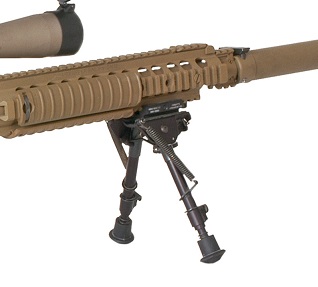
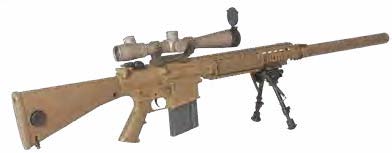
7.62 mm Semi-Automatic Sniper Rifle System (M110 SASS) (Army Photo)
The Department of the Army is looking for new manufacturers to produce the M110 SASS 7.62 mm Semi-Automatic Sniper Rifle System. Firearms manufacturers need to respond before the end of June if they are interested in potentially winning a long term government contract award for supplying approximately 2,000 new M110 Semi-Automatic Sniper Systems (SASS) 7.62mm Sniper Rifles.
The Department of the Army issued a Request for Information (RFI) seeking to identify potential sources capable of providing these Semi-Automatic Sniper Systems to the Army. Interested companies and Firearm manufacturers are asked to complete a short questionnaire before June 28th 2019.
Potential Contract Value:
The M110 SASS Weapon unit cost listed in the Army’s fiscal year 2013 Budget was $11,214.00. That was the most recent year we could easily find a unit price for the M110. The total potential contract value could be over $22 Million dollars for an order of 2,000 M110’s at 2013 prices. Today 6 years later prices are sure to have gone up.
Current Manufacturer:
Knight’s Armament Co produced a batch of new M110 SASS 7.62mm Sniper Rifles a few years back contract number W52H09-10-C-0061. On December 20, 2018 the U.S. Army Contracting Command awarded a government contract to Knight’s Armament Company with a contract “total estimated value” of $16,550,140.00. The contract is for overhaul of the M110 Semi-Automatic Sniper System (SASS), NSN: 1005-01-534-2841. The government solicitation W56HZV-17-R-0026 which was posted on January 27, 2017 led to this award, it was a “Sources Sought” to determine industry capability to overhaul up to 1,725 M110 7.62mm Sniper Rifles.
This current Sources Sought solicitation W15QKN-19-R-06K7 is seeking to find new sources capable of producing the M110 Semi-Automatic Sniper System (M110 SASS) a 7.62mm Sniper Rifle. This Request for Information originating from Project Manager Soldier Weapons (PM SW) has a short questionnaire for interested manufacturers. The estimated contract length is 5 years, with a total quantity of approximately 2,000 systems. This Market Survey for the M110 SASS is not to be confused with requirements for the CSASS (Compact Semi-Automatic Sniper System).
BidLink has been a leading provider of DOD procurement research tools and data for the past 20 years. Find defense contracts, solicitations, sources for items, and research competition. Learn more at www.bidlink.net
M110 7.62 mm Semi-Automatic Sniper Rifle Sysyem (M110 SASS) (Photo Credit: Marie Berberea)
The M110 Semi-Automatic Sniper System (M110 SASS) is classified as a Small Arms System. It is a medium caliber sniper rifle used in close-combat situations such as urban areas. The M110 includes a suppressor, 3.5×10 scope with illuminated Mil Dot Reticle. It also comes with a M151 Enhanced Spotting Scope that allows recognition and identification of targets at long distances. The spotting scope has 12-40x magnification with a 60mm objective lens diameter. The M110 is used by the U.S. Army and U.S. Marines. In addition several other countries use and obtain the M110 SASS through Foreign Military Sales (FMS).
Mil Dot Reticle in a sniper rifle. The Mil-Dot pattern is utilized when laser range finders are nonfunctioning or unable to be utilized. Snipers basic skills include the ability to calculate distance without a laser range finger. (Photo Credit: Lance Cpl. Reece E. Lodder)
M110 Semi-Automatic Sniper System (M110 SASS) details:
TM 9-1005-342-10 – Operator’s Manual for M110 Semi-Automatic Sniper System (SASS)
TM 9-1005-342-23&P – Field Maintenance including Repair Parts and Special Tools List (RPSTL) for M110 Semi-Automatic Sniper System (SASS)
Weapon Status:
Completed fielding of 2,083 total systems fiscal year 2016-2018
The M110 System is currently in the operation and sustainment phase, fiscal years 2019-2023
Major Contractors of the M110 Sniper Rifle:
Knight’s Armament Co – Manufacturer of the rifle.
Leupold & Stevens Inc. – Manufacturer of the rifle scope.
Contractor Details:
Knight’s Armament Company is a manufacturer, machine shop and research and development facility manufacturing complete weapon systems such as guns, rifles and accessories. Their CAGE code is 1S002; primary business classification NAICS code 332994 small arms manufacturing; listed Federal Supply Classes (FSC’s) 1005, 1240 and K010 – Guns, through 30mm, Optical sighting and ranging equipment, and Modification of weapons.
According to BidLink procurement history records Knight’s Armament Company has had several government contracts for the new manufacture of the M110 as well as repair and overhaul contracts.
Government contract activity for Knight’s Armament Company goes back to the year 1984 with relatively low competition on contract awards they win.
Leupold & Stevens Inc is a manufacturer, machine shop and research and development facility manufacturing a variety of Telescopic sights, Optical instruments, Spotting scopes, Rifle Scopes, Rangefinders, Ballistic reticles, Binoculars and accessories. Their CAGE code is 35848; primary business classification NAICS code 332994 small arms manufacturing. With over 650 employees they are a mid-sized business.
According to BidLink procurement history records Leupold & Stevens has had several government contracts for Optical instruments, Spotting scopes and Rifle Scopes with activity back to the year 1984 with relatively low competition on the government contract awards they win.
Where do I find Government contracts or solicitations relating to the M110 or related guns?
The Government Contracting Office issuing Solicitations and Contracts for buys, repairs and overhauls for the M110 Semi-Automatic Sniper System (SASS) is:
Contracting Office: Project Manager Soldier Weapons
Contracting Office Code: W15QKN
Contracting Office Name: Army Contracting Command (ACC-NJ)
Contracting Office Address: Building 10 Phipps Road, Picatinny Arsenal, New Jersey 07806-5000
Try searching at www.bidlink.net
BidLink has been a leading provider of DOD procurement research tools and data for the past 20 years. Find defense contracts, solicitations, sources for items, and research competition. Learn more at www.bidlink.net
Project Manager Soldier Weapons Program Office Organization Chart
Within the Department of Defense (DOD) there are 100’s of Program Offices located throughout the United States. Each Program Office focuses on specific products that our American Soldiers depend on every day. The Program Office is the centralized location for all activities related to development, test, evaluation, acquisition, production of a specific product or system the DOD uses.
For example if your company manufactures items like springs, pins, nuts, bolts, brackets, tripods, scopes, binoculars, cloth bags, straps etc., your items might be used on some type of gun or rifle. The knowledge of where your item is used is invaluable. Knowing what agencies, departments or Program Offices deal with those types of items can potentially lead your company to more government business opportunities.
One way to find potential Program Offices that your company might eventually deal with, possibly offering them a “better solution” to the items they currently use is to look at past government contract awards, to find contracting offices buying those items.
The Project Manager or Program Office works along with various contracting agencies to get what they need. Those contracting offices post Solicitations, Request for Information (RFI), and Request for Proposals (RFP).
Project Manager Soldier Weapons (PM SW) is one of the hundreds of Department of Defense (DOD) Program Offices located throughout the United States. Project Manager Soldier Weapons is a sub division of Program Executive Office Soldier (PEO Soldier) located at Fort Belvoir, Virginia.
PEO Soldier Address:
SFAE-SDR
5901 Putnam Road Building 328
Fort Belvoir, VA 22060-5422
Project Manager Soldier Weapons (PM Soldier Weapons) has two subdivisions, Product Manager Crew Served Weapons (PM CSW) and Product Manager Individual Weapons (PM IW). Each division focuses on certain types of items.
Product Manager Crew Served Weapons (PM CSW) is responsible for larger systems used by groups of individuals; Items such as Machine guns and Grenade launchers.
Product Manager Crew Served Weapons
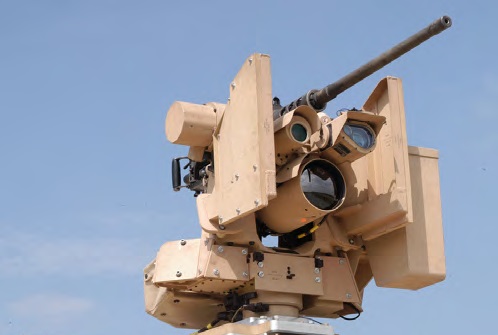
M153 Common Remotely Operated Weapon Station (CROWS)
M153 Common Remotely Operated Weapon Station (CROWS)
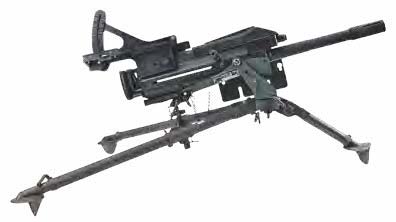
MK19 Grenade Machine Gun
MK19 Grenade Machine Gun
M2 .50 Caliber Machine Gun
M2A1 .50 Caliber Machine Gun
M240B Medium Machine Gun
M240H Medium Machine Gun
M240L Medium Machine Gun
M240L Short Barrel
M240B Collapsible Buttstock
M240L Collapsible Buttstock
M240B Adjustable Bipod
M240B Combat Ammo Pack
M249 Squad Automatic Weapon (SAW)
M249 Short Barrel
M249 SAW Improved Bipod
M249 SAW 200-Round Soft Pack
M249 SAW Short Barrel
M249 SAW Collapsible Buttstock
M145 Machine Gun Optic (MGO)
M192 Lightweight Ground Mount for Machine Guns
M205 Lightweight Tripod for Heavy Machine Guns
Binoculars:
M22 Binoculars
M24 Miniature Binoculars
M25 Stabilized Binoculars
M25E1 Stabilized Binoculars
Close Combat Mission Capability Kit (CCMCK) System
Product Manager Individual Weapons (PM IW) is in charge of Rifles, Carbines, Pistols, Shotguns, Grenade launchers and Sniper systems.
Product Manager Individual Weapons
M4 Carbine
M4A1 Carbine
M16A2 Rifle
M16A4 Rifle
M320 Grenade Launcher
M320A1 Grenade Launcher
M203 Grenade Launcher
M203A1 Grenade Launcher
M203A2 Grenade Launcher
M26 12-Gauge Modular Accessory Shotgun System (MASS)
M500 Shotgun
M107 Semi-Automatic Long Range Sniper Rifle (LRSR)
M2010 Enhanced Sniper Rifle (ESR)
M110 Semi-Automatic Sniper System (SASS)
M110 Semi-Automatic Sniper System SASS
M24 Sniper Weapon System (SWS)
M14 7.62MM Enhanced Battle Rifle (EBR)
M9 9mm Pistol
M150 Rifle Combat Optic (RCO)
M151 Sniper Spotting Scope
M151 Improved Spotting Scope
Close Quarters Battle Kit (CQB Kit)
Future Initiatives (as of 2017):
Precision Sniper Rifle (PSR)
Compact Semi Automatic Sniper System (CSASS)
Carbine Modernization – M4 Product Improvement Program – Improve the nearly 500,000 M4s in inventory
Modular Handgun System (MHS)
M68 Close Combat Optic (CCO)
BidLink has been a leading provider of DOD procurement research tools and data for the past 20 years. Find defense contracts, solicitations, sources for items, and research competition. Learn more at www.bidlink.net
Picatinny Arsenal is a large military installation providing a wide variety of guns, ammunition, products and related services to all branches of the U.S. military. Picatinny Arsenal is located in northern New Jersey near Interstate 80 (I-80) about 35 miles west of New York City.
As of 2019 Picatinny Arsenal employed over 5000 people most of them civilians with approximately one-third of these employees engineers and scientists. There are an additional 400 plus employees working for affiliated organizations at Watervliet Arsenal, Rock Island Arsenal, Aberdeen Proving Ground.
History
Picatinny Arsenal was established in September 1880, it was first known as the Dover Powder Depot. Then a few days later they changed their name to Picatinny Powder Depot and in 1907 the Army changed the name to Picatinny Arsenal. Powder (black powder, gun powder) and munitions were some of the first products to be produced at Picatinny. Today the organization has expanded tremendously.
Picatinny Arsenal installation is home to several organizations, with more than 1,010 permanent structures and 64 laboratories, there is a lot going on at their 6,500 acre campus.
Organizations
Combat Capabilities Development Command (CCDC) Armaments Center
Picatinny Arsenal is a research and development, engineering and production facility for weapons systems. New weapons, munitions and auxiliary equipment are produced and fielded by Picatinny. All branches of the U.S. armed services, including infantry, artillery, armor, aircraft and engineers benefit from what Picatinny has created.
Products and Services – Below is a sample of what Picatinny Arsenal is involved with
BidLink has been a leading provider of DOD procurement research tools and data for the past 20 years. Find defense contracts, solicitations, sources for items, and research competition. Learn more at www.bidlink.net
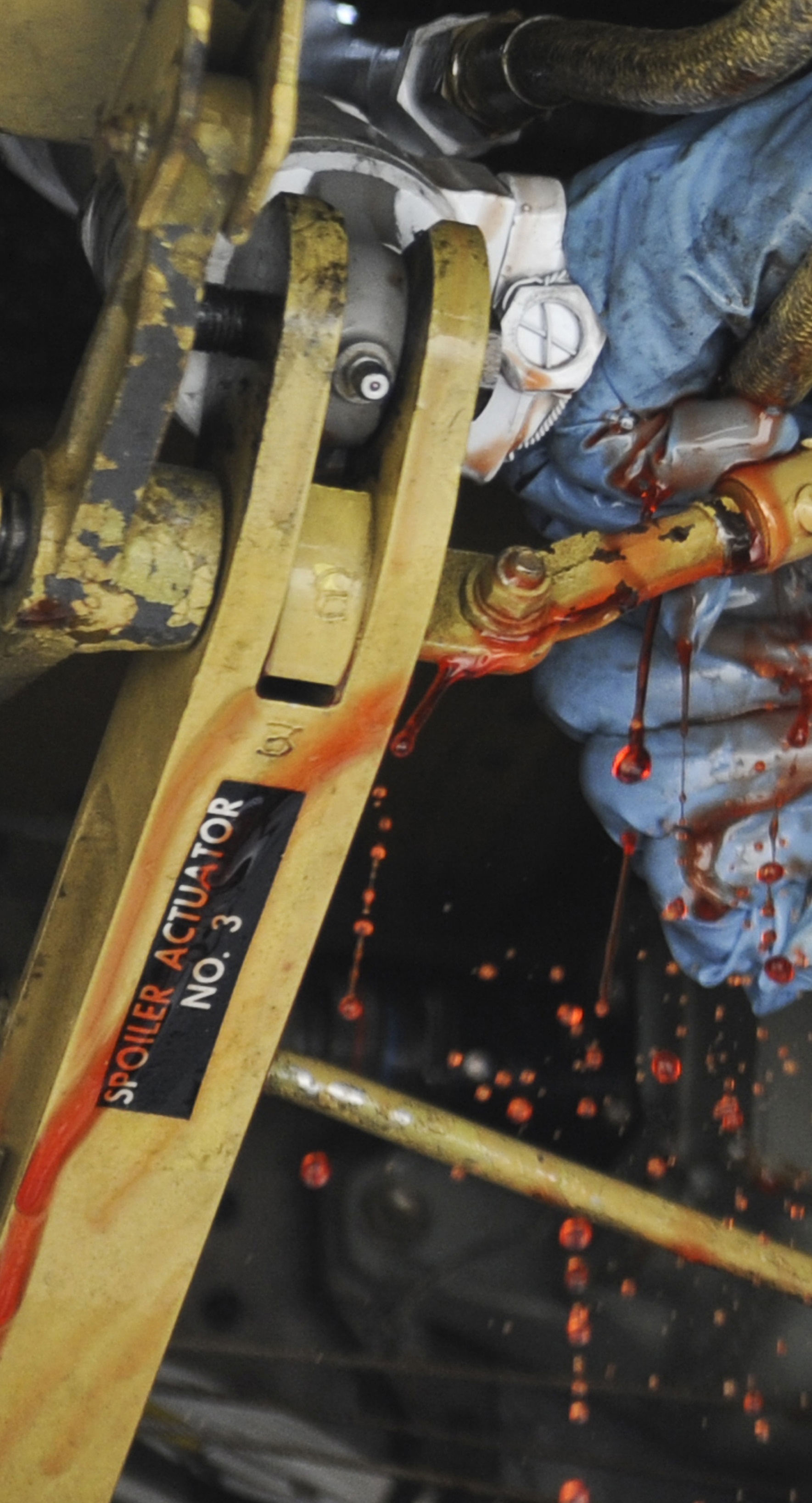
Spoiler Actuator for B-52H Stratofortress (U.S. Air Force photo – Micaiah Anthony)
An actuator is essentially a device that converts energy into a motion. Actuators can be simple assemblies built from a grouping of parts like brackets, cylinders, gears and ball screws. The entire assembly usually built for a specific purpose is known as the actuator. They run on a variety power sources all depending the available power source such as electric, air, or hydraulic oil. The device is used to move, push or pull something and is usually part of a larger assembly such as an aircraft wing.
One example of an actuator in use is the action of your hand and fingers moving to picking up an object. Your hand is actually a very complex actuator. However the type of actuators we will be talking about are mechanical, nonhuman ones specifically what the Department of Defense (DOD) buys. Companies with any manufacturing expertise should explore producing actuators for the DOD as some of the items we reviewed only one manufacturer was listed, they were Sole Source.
Where are actuators used?
The actuators that DOD buys are used in items such as Aircraft, UAV’s, Drones, Engines Missiles, Vehicles, Tractors, Cranes, Ships, Brakes, etc.
In our everyday life we use actuators in our homes and vehicles. Your washing machines’ spin/agitator action relies on an actuator. Engine actuators, brake actuators, tailgate actuators, windshield wiper actuators and mirror actuators are all used in your car. Actuators are basically devices used to move, push, pull, open and close things.
The U.S. Military, Department of Defense buys actuators and plenty of them. Uses include the above mentioned ones plus others such as Aileron actuators, Gun actuators, Aircraft actuators, and Motor actuators. As the Military equipment gets used and abused actuators either need to be replaced or repaired. Unlike most household items much of the U.S. Military equipment is very expensive with life spans approaching 50 years, so the process of repairing consumes spare parts such as actuators.
Actuator Motions
Actuators provide two basic types of motion linear or rotational motion. Actuators provide two basic types of motion linear or rotational motion. An Air/Hydraulic cylinder could be pushed and pulled; a rotary Ball screw/Lead screw can be turned by an electric motor.
Commonly used Actuators
Some common types of actuators are: Electro-mechanical actuators, Hydraulic-pneumatic actuators, Mechanical actuators, Electro-pneumatic actuators, Explosive actuators, Piezoelectric actuators.
Types of Actuators the Defense Department Buys
The Department of Defense uses a variety of actuator types on various platforms such as Aircraft, Ships, Systems, and Vehicles. For this article we decided to discuss a few types of actuators the Department of Defense is currently buying. We did some quick research in BidLink.net to find a few current open government solicitations to review, try it for yourself. After looking at a few interesting open solicitations for actuators we then reviewed all the past procurement history (contract history) for each of the NSN’s as well as related data found in BidLink, look below to see what we found.
The four categories of actuators we decided to review were: Linear hydraulic-pneumatic actuators, Rotary electro-mechanical actuators, a Parking brake actuator assembly and a Spring brake actuator. These 4 items were just a sample of what we found.
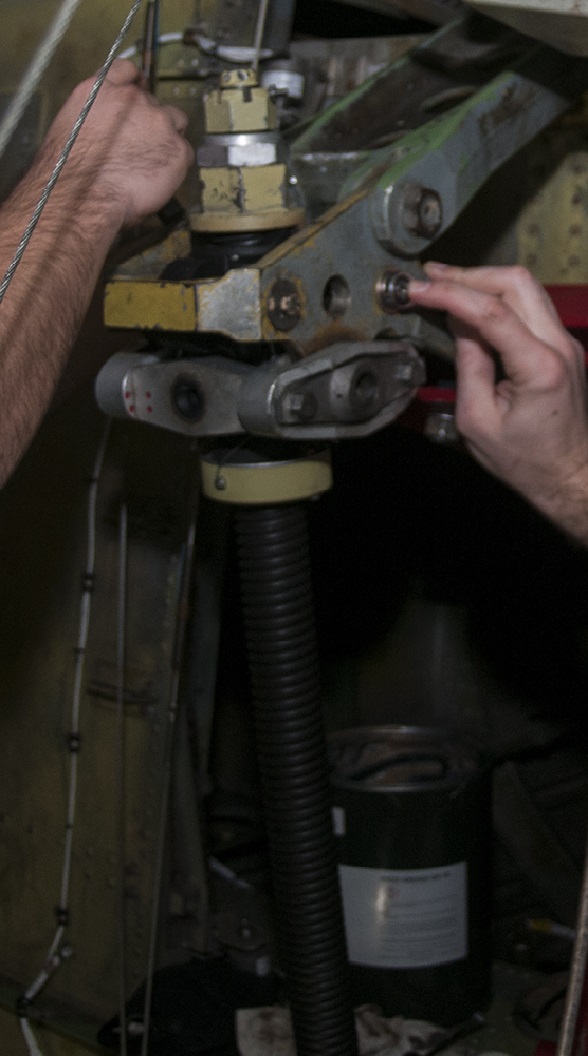
Linear actuator example. This Stabilizer trim actuator is used in the tail of a KC-135R Stratotanker. It controls the horizontal stabilizer, pilots it to adjust the pitch, or up and down movement, of the aircraft’s nose. Photo – Dakota Bergl
Linear Actuator
A simple example of a linear actuator in use by the U.S Marines is for the opening of a 500 pound vehicle rear door on the Mine Resistant Ambush Protection (MRAP) Buffalo vehicle. This specific actuator is a linear electric actuator. When DOD purchases this item they use the official Item Name: Actuator, Electro-Mechanical, Linear. When searching for government solicitations knowing what DOD calls the item “The official name” is essential in either researching past government contract awards or bid searching.
Linear hydraulic-pneumatic actuator
This NSN 4810-01-620-4341 (part number 3847AS286-1) is a linear hydraulic-pneumatic actuator currently being sold to the Defense Logistics Agency (DLA) Maritime hardware and electrical division by a by a broker of military parts. This item is used with the Navy’s Ground Support Equipment (GSE).
Free Trial for BidLink
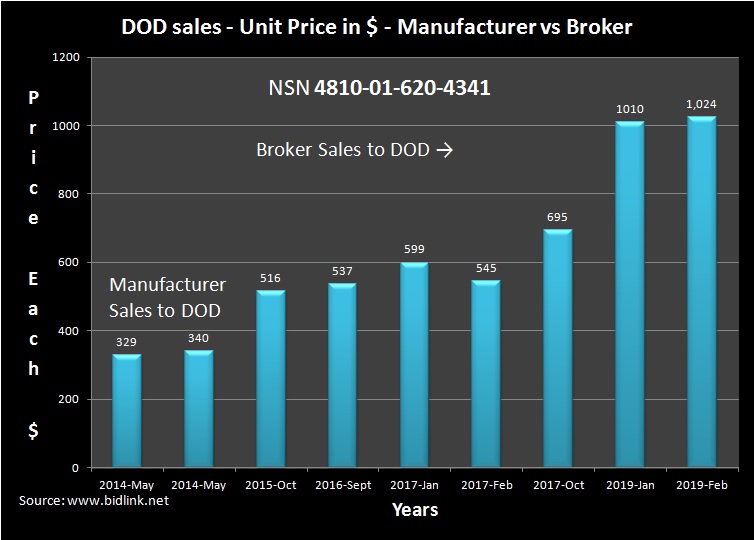
According to BidLink NSN records the approved manufacturer is Carolina Growler CAGE code 550C1. They supplied the part direct to DOD back in the year 2014 under two separate contracts. Since then from 2015 till today the part has been sold to the DOD by only one broker. Pricing has risen steadily for three years and skyrocketed in the past two years, now costing 3 times more than what the manufacturer charged when they sold it direct to DOD in 2014. See graph below for details.
Graph showing sales of an actuator sold to the Department of Defense directly by the manufacturer; then a broker takes over the sales and prices steadily increase. This specific example is for a linear hydraulic-pneumatic actuator NSN 4810-01-620-4341. This is not a unique case as we have seen this happen with other items.
What are some possible reasons for such a dramatic price increase?
Did the price for this NSN 4810-01-620-4341 go up due to material costs?
Is the item manufactured by only one company is it a sole source item? While working on another article we saw this same dramatic price hike on another NSN from the same broker.
Is there no competition?
These are the some of the questions that the data will answer.
What could some potential outcomes be after looking at the data?
DOD might look for new companies to manufacture this item.
New Manufacturers might consider becoming a new source for this item.
Current Solicitations for NSN 4810-01-620-4341
This linear hydraulic-pneumatic actuator is ordered several times per year at varying quantities. Last week a government solicitation was posted asking for a quantity of 22 pieces. Will a new manufacturer start producing this item or will the price rise again?
Sole Source Items
When items are “Sole Source” one effect can be price increases due to no competition. Some companies look at items with no competition as potential business opportunities for them. The Department of Defense does not want items with only one source. They are constantly looking for new sources; manufacturers with specific skills should be on the lookout for items like these.
Rotary electro-mechanical actuator
This Rotary actuator NSN 3010-01-316-0190 U.S. Army part number 12285327-1 is actively being purchased by the Department of Defense. A complete drawing package is available from the DOD for any manufacturer interested in making this item. BidLink contract procurement history records show the same manufacturer has been winning contracts for this item for the past 5 years. There is currently an open solicitation for this NSN 3010-01-316-0190 with potential contract value over $100,000.00
This item is used on a few different U.S. Army and U.S. Marine tanks.
Parking brake actuator assembly
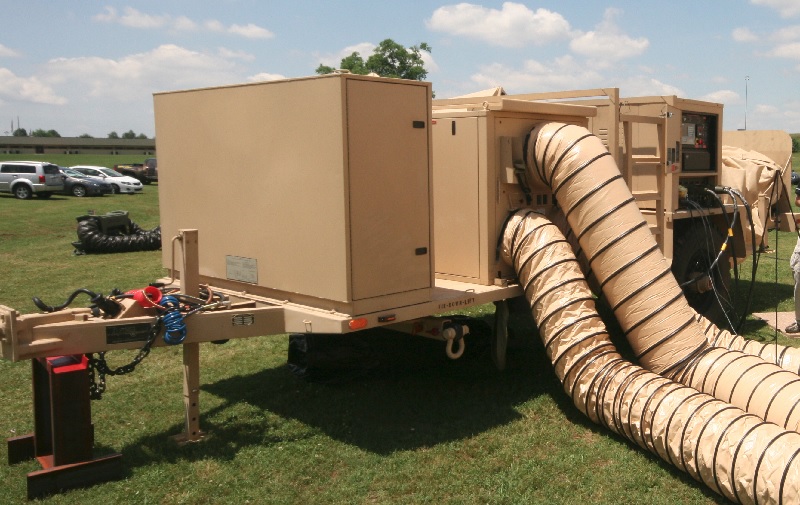
This NSN 2530-01-568-0031 part number TG404-0819 from HDT Expeditionary Systems/DHS Technologies is parking brake actuator assembly used by the U.S. Army as part of their Trailer Mounted Support System (TMSS) Generator/Power Plant Utility. This is one of the many shelter systems the U.S. Army uses when setting up Tactical Operations Center or TOCs all over the world when they deploy. It’s pulled by a HMMWV and if you go camping you’ll want one of these. It’s basically a full size tent complete with AC Generator, HVAC unit and electric outlets included all mounted on a trailer. In fact you might have seen one on display if you live in Laredo, Texas. The Department of Defense gave the Homeland Security Investigations, Immigration and Customs Enforcement (ICE) division one of these setups in May of 2018.
The Defense Logistics Agency (DLA) Land and Maritime Vehicle support division is currently looking for new sources of this item and they say there is an annual demand quantity of 41. The last contract price we show in April 2019 was around $2,000.00 each. All the DOD suppliers shown in our recent procurement history for this were all brokers.
Trailer Mounted Support System (TMSS)TG200-1000T. The Parking brake actuator assembly NSN 2530-01-568-0031 is used on the Trailer Mounted Support System (TMSS) above.
Spring Brake Actuator
The NSN 2530-01-483-3949 is a Spring brake actuator used on the 2.5 Ton Multi-Purpose Vehicle Trailer. It’s a combination an air operated braking device that performs the functions of service braking and emergency or park braking. One section of the device functions as a brake chamber and the other section uses a heavy duty spring, piston, and diaphragms.
This current open solicitation SPE7L1-19-T-210B for this NSN 2530-01-483-3949 closes next week is for a quantity 145 pieces. DOD has a complete set of drawings for any company to review. This current solicitation for spring brake actuators is also a Hubzone Set-Aside.
Past Procurement history shows a mix of distributors/brokers and OEM selling this item. Companies like Oshkosh and Haldex make parts like this, however since DOD has a complete set of drawings any company with manufacturing capabilities could become a new source for this item.
In this review we uncovered opportunities for manufacturers of brake components and vehicle parts. In addition the review of the data showed us other potential trends and opportunities. We only looked at 4 parts today, the Department of Defense posts thousands of new solicitations per day for parts they need.
Time spent researching; going beyond just simple bid searching can lead to new opportunities for your company to sell to DOD. Asking questions like who sold the item in the past? Is the company a manufacturer or a broker? What other parts do they make? Where are those items used? These are some of the questions you should ask while reviewing the data. You might find new directions or new product lines your company can produce.
BidLink has been a leading provider of DOD procurement research tools and data for the past 20 years. Find defense contracts, solicitations, sources for items, and research competition. Learn more at www.bidlink.net
The U.S. Government purchases supplies and services in a variety of ways such as posting solicitations for supplies or services they need to places like FedBizopps or DIBBS. They also purchase items, micro purchases directly from companies using their Government credit card.
U.S. Government Credit Cards
Does the government use credit cards?
Yes, the U.S. Government has used purchase cards (IMPACT cards, Credit cards) for over 30 years to buy supplies and services. The Government Purchase Card (GPC) program was created in the late 1980’s as a way for federal agencies to streamline the acquisition process by providing the end user an efficient way to obtain goods and services directly from vendors rather than processing request through Government procurement offices. The National Defense Authorization Act for fiscal year 1998 said by October 1, 2000, “at least 90 percent of all eligible purchases made by the Department of Defense for an amount less than the micro-purchase threshold shall be made through streamlined micro-purchase procedures”.
What is an IMPACT card?
International Merchant Purchase Authorization Card
What is a micro purchase?
A micro purchase according the Federal Acquisition Regulation (FAR) is “an acquisition of supplies or services using simplified acquisition procedures, the aggregate amount of which does not exceed the micro-purchase threshold”.
What is the micro purchase threshold 2019?
The micro purchase threshold according to the Federal Acquisition Regulation (FAR) as of May 2019 is $3,500. There are some exceptions – see Federal Acquisition Regulation (FAR) Part 2 – Definitions of Words and Terms https://www.acquisition.gov/content/part-2-definitions-words-and-terms
Contract for Credit Card Services
The General Services Administration (GSA) Federal Acquisition Service (FAS) Office of Acquisition Operations, Office of Travel, Motor Vehicles and Card Services (QMA) recently awarded two $700 Billion dollar contracts for the GSA SmartPay program.
GSA SmartPay Details:
What is SmartPay?
The SmartPay program is the largest government-wide charge card services program in the world. It is run by the General Services Administration (GSA) a department of the U.S. Government. It is said to support more than 560 agencies/organizations around the globe. In fiscal year 2016 U.S. Government agencies/organizations spent $28.5 billion using the GSA SmartPay purchase card.
GSA established the SmartPay program in 1998 and the current program name is SmartPay 3. Over the past 21 years the program has evolved and grown. The previous master contracts were under the name SmartPay 2 which ended in 2018.
GSA SmartPay covers four main areas: Fleet, Travel, Purchase and Integrated solutions.
Fleet: Fueling and maintenance of vehicles, boats, planes or equipment.
Travel: Travel such as Airfare, car rentals, lodging and meals.
Purchase: Day-to-day business purchases necessary to run an organization.
Integrated solutions
Interesting SmartPay Facts:
In December 2018 there were close to 3.3 Million government credit card holders under the GSA’s SmartPay program.
In November 2018 the Department of Defense had over 81,000 SmartPay “Purchase” credit card holders.
Banks use what are known as a Merchant Category Codes (MCCs) to identify different types of businesses. Merchant Category Codes are reported on some U.S. Government spending reports.
Here are a few code examples with vendors who supplied the items:
Code – Title – Vendor
5942 – Book stores – Amazon
5200 – Home supply warehouse stores – Home Depot
5732 – Electronics stores – Apple
Some government agencies block certain MCC codes to prevent misuse of the credit card.
Who are the top 5 big box stores the Government buys from?
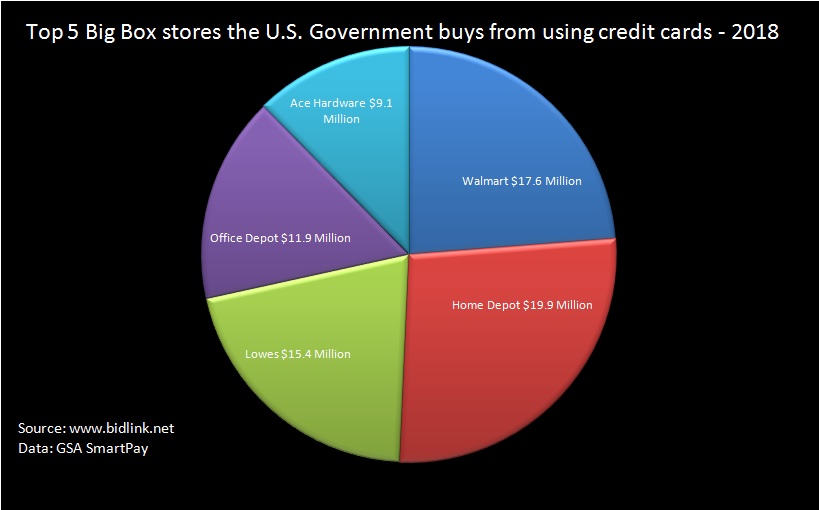
In 2018 the U.S. Government spent a total of $74 Million dollars with the following companies using credit cards. The top 5 big box stores selling to the US Government are Home Depot, Walmart, Lowes, Office Depot, and Ace Hardware. Sales are based on 2018 SmartPay chip cards (credit card) data.
See the chart below the breakdown of sales.
Top 5 Big Box Stores Selling to the US Government
Since the U.S. Government encourages its employees to use credit cards to make purchase for supplies under the micro-purchase threshold of $3,500.00 they could potentially NOT buy from your company if you did not accept credit cards. One question as part of your System for Award Management (SAM) registration to get your CAGE code is “do you accept credit cards as a method of payment ?” https://sam.gov/SAM
SmartPay Contracts – Details
Previous Contract – This contract expired on November 2018
Program name: GSA SmartPay 2 (SP2)
Master Contract Numbers & Company:
GS-23F-T0002 – J.P.Morgan Chase
GS-23F-T0003 – Citibank
GS-23F-T0004 – US Bank
Current Contract – Began in November 2018, will continue through 2031 is all options are chosen.
Program name: GSA SmartPay3 (SP3)
Master Contract Numbers & Company:
GS-36F-GA001 – US Bank
GS-36F-GA002 – Citibank, N.A.
Solicitation Number GS10F17LPP0003
General Services Administration
Office: Federal Acquisition Service (FAS)
Location: Office of Acquisition Operations, Office of Travel, Motor Vehicles and Card Services (QMA)
Product Service Code (PSC) R710 Support- Management: Financial
NAICS 522110 Commercial Banking
Office code: 47QRAC
The Office of Professional Services and Human Capital Categories (PSHC) is responsible for the strategic leadership, oversight, and management of FAS’s professional services, human capital services, and charge card management programs and contracts.
BidLink has been a leading provider of DOD procurement research tools and data for the past 20 years. Find defense contracts, solicitations, sources for items, and research competition. Learn more at www.bidlink.net
To immediately improve the efficiency of your bid searches; be sure that you’re using the right item category.
Wherever you may go to find current DoD bidding opportunities (DIBBS, FedBizOps, BidLink.net, etc.), it’s really important to follow some basic guidelines for conducting productive searches. With thousands of new solicitations published daily, and possibly hundreds for just the type of products that you can supply, you’ll simply never have enough time to wade through all the information without an efficient bid management process. In this post, we review one of the fundamental elements.
Many people try to find government contracting opportunities by searching for them under their company’s North American Industry Classification System (NAICS) codes. After all, when you first registered your company at the SAM.gov website you provided the NAICS code that best describes your business.
Unfortunately, this is not the way to do it. Consider the following.
Let’s say you are a distributor of electrical connectors. The NAICS code describing your business is “423610; Wholesalers of Electrical Apparatus and Equipment, Wiring Supplies, and Related Equipment.” Currently, over 6,000 companies list themselves under this NAICS code in their SAM.gov registrations. They include distributors of all of the following products:
Alarms
Batteries (except automotive)
Electrical Boxes and fittings
Busbars and trolley ducts
Capacitors (except electronic)
Circuit breakers
Coaxial cable
Electric wire and cable conduit
Electrical conduits and raceways
Electrical connectors
Electrical construction materials
Current-carrying wiring devices
Electrical distribution equipment
Electric light fixtures
Electric motors
Electric prime movers
Electrical apparatus
Electrical fastening devices,
Electrical fittings
Flashlights
Fuses
Electrical generators
Electrical hanging devices
Hardware, transmission pole and line
Electrical industrial controls
Electrical measuring Instruments
Insulated wire or cable
Electrical insulators
Light bulbs
Electrical lighting fixtures
Lightning arrestors
Electrical Lugs and connectors
Electrical meters
Electric motor controls
Motors, electric
Panelboards, electric power distribution
Pole line hardware
Electrical power transmission equipment
Electrical receptacles
Voltage regulators
Relays
Security systems
Signal systems and devices
Storage batteries (except automotive)
Electrical distribution switchboards
Electrical switches
Electrical transformers
Electrical transmission equipment
Electrical unit substations
Insulated Wire
Wiring supplies
However, when the Department of Defense posts solicitations for these items, it hardly ever uses NAICS code 423610.
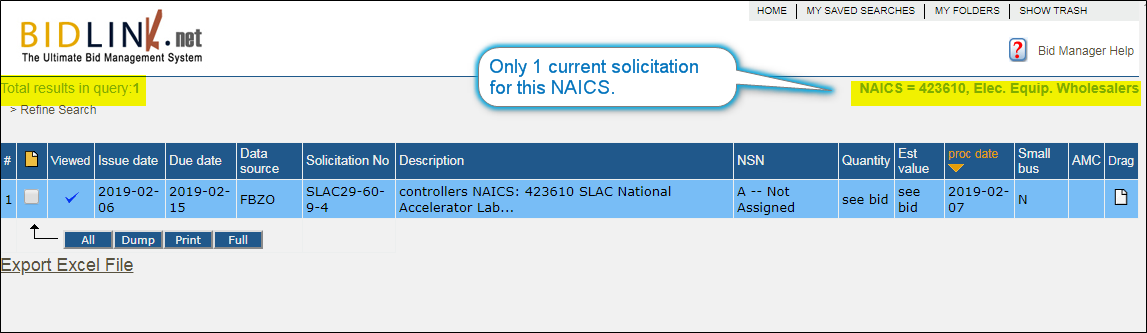
When we searched in BidLink.net for open solicitations under NAICS code 423610, this is all we got:
(Click to Enlarge)
The alternative? To get good results from your bid searches, you have to use the right Federal Supply Classes (FSC’s).
Try setting up a solicitation search in your preferred site to see the difference. A search with NAICS code 423610 will show very few solicitations, whereas searching with a code like FSC 5935 (the FSC for “Electrical Connectors”) gives MUCH better results, like this:
(Click to Enlarge)
To immediately improve the efficiency of your government solicitation search; use the applicable Federal Supply Class !
BidLink is a leading commercial provider of DoD procurement and government contracting data and bid management tools. To find DoD solicitations, research contracting history in detail, and bid more effectively, try BidLink.net. You can sign up for a FREE TRIAL and DEMO here >> Free Trial Signup.
—-
If you found this article interesting, try another >> DoD Procurement; Acquisition Method Codes (Part 1)
—-
The development of the Air Intercept Missile (AIM)-9
Sidewinder began in the 1950s’ at a Navy facility in California known as the Naval
Ordnance Test Station (NOTS). Today it
is known as the Naval Air Warfare Center Weapons Division (NAWCWD).
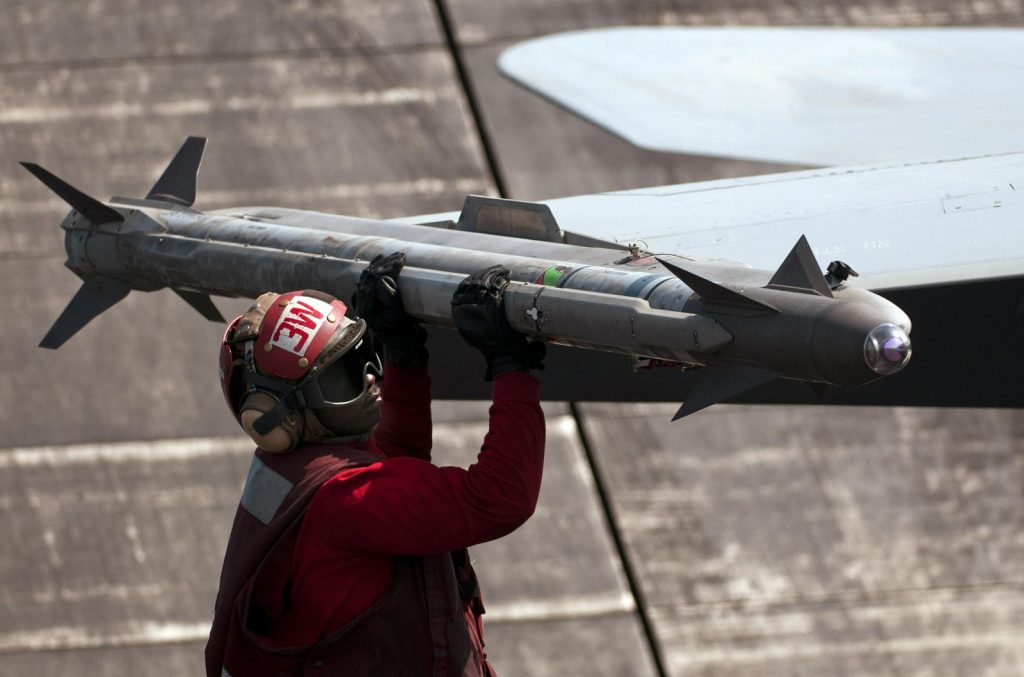
The AIM-9 Sidewinder is a supersonic, short-range air-to-air missile which entered service in 1956. Many variants and upgrades have occurred in the past five decades. Used on aircraft such as the F-15, F-16, F/A-18, F-22, AV-8B, AH-1 and A-10 aircraft. Additionally, the Sidewinder is used by over 30 Foreign Militaries on over 12 different types of aircraft.
Missile components include items such as infrared homing guidance, active optical target detector, high-explosive warhead, and a rocket motor. This technology enables the missile to home on target aircraft engine exhaust. The infrared seeker permits pilots the ability to launch the missile, then leave the area or take evasive action while the missile guides itself to the target.
AIM-9M Sidewinder Missile
Newer versions include the AIM-9X Sidewinder and AIM-9X Block II which is the most advanced short range air-air missile in the U.S. inventory. Thousands of individual NSN parts makeup the missile and many of the legacy components are incorporated into the newer models. Prime contractors include Raytheon & Ford Aerospace.
BidLink has been a leading provider of DOD procurement research tools and data for the past 20 years. Find defense contracts, solicitations, sources for items, and research competition. Learn more at www.bidlink.net
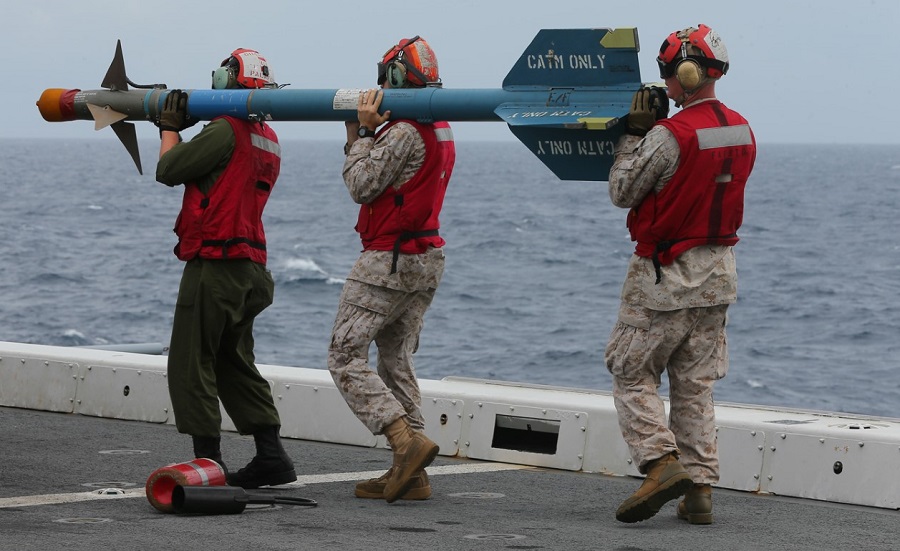
AIM-9 Missile – Captive Air Training Missile (CATM) – photo credit Cpl. Jonathan Waldman
This week DLA Land and Maritime is currently performing market research to find new manufacturers of a specific float valve used with the AIM-9 missile. This specific float valve has been provided by the same manufacturer for close to 20 years and who appears to be a contract manufacturer/job shop according to BidLink procurement history. What can that mean to you? Just because it’s called a valve does not necessarily mean it’s made by a “valve manufacturer”.
Although the AIM-9 Missile is a Navy Program with Air Force as a joint participant DLA still gets involved especially when it comes to spares. DLA is responsible for buying millions of parts used by all the services. If your company manufactures anything, this one is worth looking at. A complete drawing package for this float valve will be available for any company to review and potentially become a new supplier.
The process for this notice which is currently open this week is, DLA receives public responses, completes their market research and then considers posting a solicitation and subsequent award. An Indefinite Quantity Contract (IQC) or Long Term Contract (LTC) will be awarded to one company for this item. The Estimated annual demand for this item is over 3,100 units each year. According NSN procurement history found in BidLink for NSN 4820-01-372-6031 the average unit price is over $70.00 each. This single contract could be a significant order for any small contract manufacturer; the potential contract value is close to a quarter of a million dollars per year. These LTC type contracts are the dreams of every contractor.
We were interested to see what other information, conclusions
or possible business opportunities we could ascertain from the data we have
access to. This is what we found: The float
valve is part of a tank supplying coolant to the missile components of the
AIM-9 Sidewinder when in flight. The
entire coolant tank assembly (model series TMU-72) was repaired by Mass
Systems/Ametek Ameron (Stock ticker AME) due to a contract awarded by Naval Air
Systems Command (NAVAIR) in 2018.
There are thousands of DOD contracting opportunities just
like this one. Successful government
contractors do more than simply search for solicitations, they perform additional
research, diving deeper looking for trends, seeing what other opportunities
might arise.
Finding government contract opportunities such as this are simple, I used keywords float and valve to find this notice. However searching for solicitations is only part of the formula for winning more government contracts. When the quality, quantity and diversity of data analyzed goes up, your picture gets clearer, potentially leading you to undiscovered business opportunities.
This article started out as a simple posting for valve manufacturers to see a possible bid opportunity. After looking at associated parts, where they are used, awarded contracts, companies involved, patterns began to appear and successful government contractors look at all of these. Try it for yourself.
BidLink has been a leading provider of DOD procurement research tools and data for the past 20 years. Find defense contracts, solicitations, sources for items, and research competition. Learn more at www.bidlink.net
The Air Education and Training Command (AETC) is headquartered
in Texas at Joint Base San Antonio-Randolph, it’s the second oldest major
command in the Air Force. The mission of
the AETC is to recruit, train and educate Airmen. The entire AETC command as of October 2018
consists of about 61,000 people including contractors. AETC flies approximately 1,300 aircraft in
several categories such as Jet trainers (T-38 Talon), Fighters (F-16 Falcon) and
Tankers (KC-135 Stratotanker) to name a few.
Operations include Air Force recruiting, Numbered air
forces and Air University. The command currently
operates 12 major installations, supports tenant units and 16 active-duty and
seven Reserve wings.
If you are interested in doing business with the Air Education and Training Command the links above can get you started. Most of the awarded government contracts are from DODAAC’s such as FA3016 and FA4801.
BidLink is a provider of DOD procurement research tools and has been a leading provider of industry marketing data relating to DOD procurement and solicitations for the past 20 years. Find defense contracts and research competition. Learn more at www.bidlink.net