



Defense News and research for the successful contractor
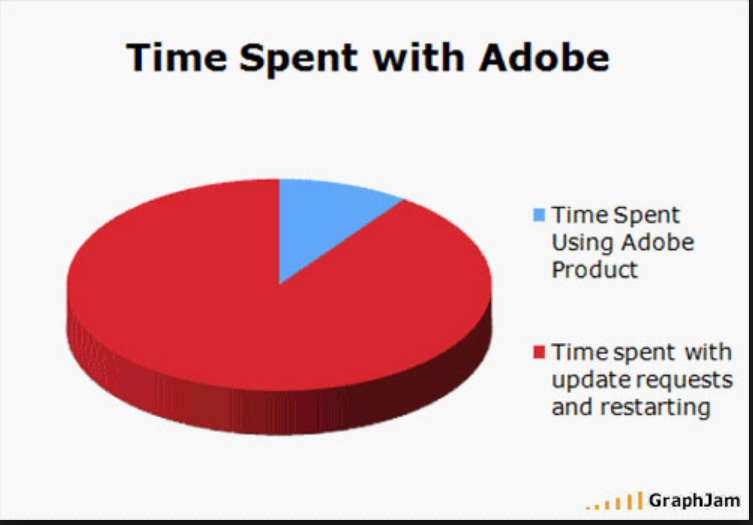
On November 20, 2018, the Defense Department switched their document generation system to use an antiquated document format called Dynamic XFA (XML Forms Architecture). XFA is not part of the PDF standard. It was included in Adobe LiveCycle in 2002 when the company acquired Canadian service provider Accelio, who was using XFA. This produced confusion as Adobe already had its own way of handling forms called AcroForms.
Adobe announced the discontinuation of the Dynamic XFA format in 2011. It is not part of the PDF 2.0 standard and is not included in their latest PDF creation tools.
This has been causing havoc all over DOD and the private sector as people have been unable to open many military documents with anything other than Adobe Acrobat Software. Attempting to open these files in the web browser produces this message:
“To view the full contents of this document, you need a later version of the PDF viewer. You can upgrade to the latest version of Adobe Reader from www.adobe.com/products/acrobat/readstep2.html
For further support, go to www.adobe.com/support/products/acrreader.html”
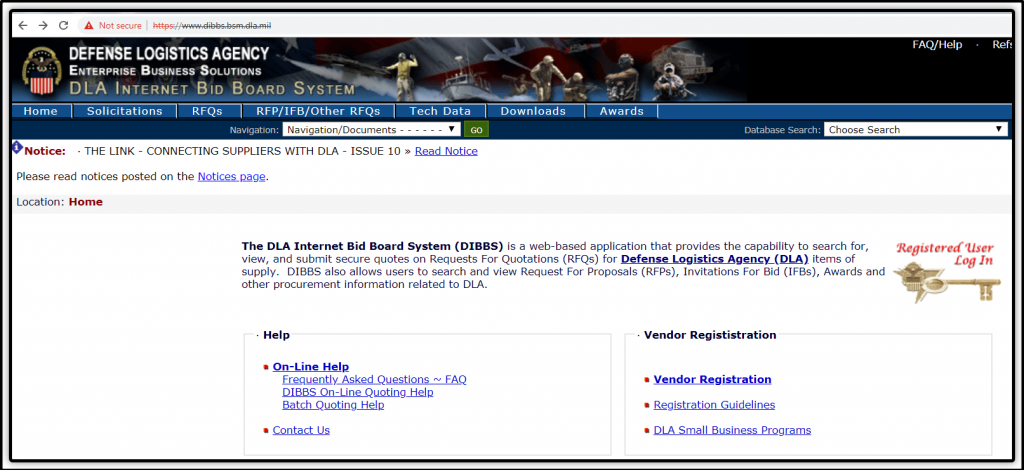
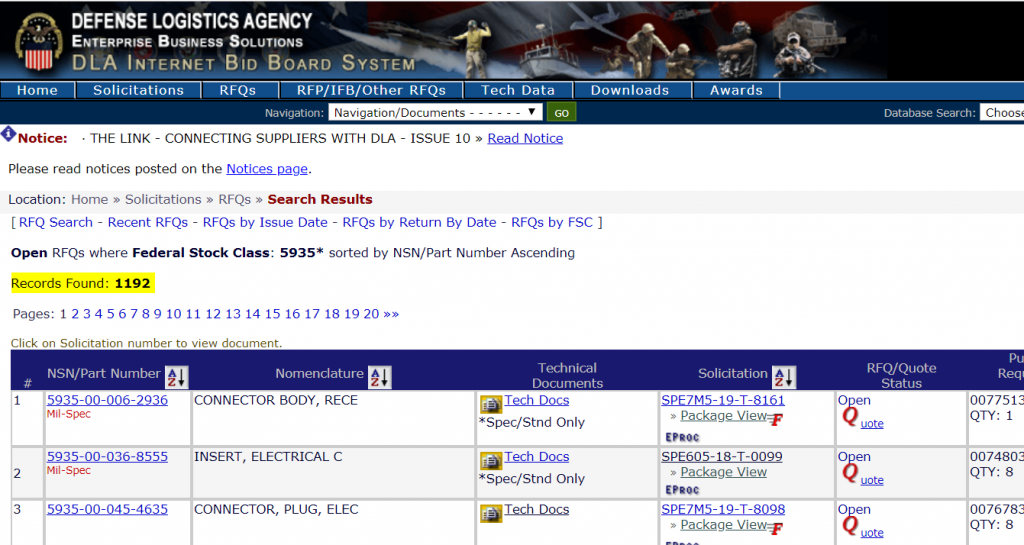
This change affects documents from DIBBS, a primary source of solicitations and awards for the defense department. After receiving many complaints from end-users about the format change, DIBBS released this statement:
Some suppliers have commented that they cannot open the solicitation and/or awards on DIBBS. This is not an issue with DIBBS, but your browser settings when it comes to Adobe. The following links are provided that can assist and properly setting your computer to read Acrobat Adobe documents. A way of testing this being the issue, if you can download the PDF to your local PC and then open it, then you need to update the plug-in in your browser.
Here is some info from Adobe found on the web:
https://helpx.adobe.com/acrobat/kb/change-in-support-for-acrobat-and-reader-plug-ins-in-modern-web-.html
https://helpx.adobe.com/acrobat/kb/cant-open-pdf.html
Unfortunately, this doesn’t help people who want to view the documents in a web browser instead of opening the bloated Adobe Acrobat program. It also doesn’t help people using Macintosh or anyone who wants to open these documents on an iPad, iPhone or Android. Shortly afterward, DIBBS began receiving complaints that their full-text search was not working. This is likely because their own system is unable to convert these Dynamic XFA documents into something that can be searched. When reaching out to DIBBS about the issue we received this response:
We did switch to another format due to security. This may be affecting the text search. The Tech Teams are still working to solve this. We were unaware of the original switch and have not been informed as to the solution to this yet.The DIBBS Team
Its obvious that they have discovered the huge mistake and are attempting to resolve it. We anticipate that they will migrate to a standardized PDF format which would resolve the above issue. In the meantime, contractors are dealing with the inconvenience of trying to open these obscure files.
Because the format is obsolete, there are very few tools that can work with it. At BidLink, we have explored over a dozen different tools to potentially convert these files into normal, flat PDF files. So far, none of these tools produce an acceptable result. We will continue to look for solutions, but are hopeful that DOD will simply abandon Dynamic XFA entirely.
TweetOver the past 18 years manufacturers have contacted us at BidLink asking questions such as:
If you are a manufacture, DoD may already be purchasing your products and you don’t know it. Currently there are over 600,000 vendors registered to sell to DoD. Many of these vendors are brokers, mass distributors or resellers selling products produced by 1000’s of manufacturers. Unless you are receiving reports from every vendor that sells to DoD it may be a mystery on which manufacturers products are actually being purchased.
Manufacturers selling direct to DoD typically know what was sold at least for their product. Whereas the manufacturer selling using other methods such as mass distributors, resellers or brokers may not know exactly what was sold or how much it sold for. Most manufacturers especially ones selling through mass distributors do not usually know what their competitors are selling to DoD. Time spend researching this will benefit your company in many ways possibly increasing your product line.
How do I research sales of my products/competitors?
This can be done by reviewing past contract awards, procurement history and reviewing things like past GSA Schedule sales.
In case you are thinking DoD only buys complex systems, think again. DoD buys tons of non-specialty items everyday as well. These are the type of items you might find in a catalog or online and they are commonly known as a Commercial Off The Shelf (COTS).
DoD buys millions of these COTS every year from both manufacturers and resellers. If you are a manufacturer the chances are pretty good that DoD is buying one of your competitors products that does exactly what your product does. It will take some time and research but the rewards can be good.
How do I research and look for products I could make?
DoD has a catalog of NSNs consisting of items they purchase on a regular basis. Part of this catalog lists what is known as the approved source(s) (AKA the manufacturer) of the specific item they are purchasing against that NSN. In many cases there is only one approved source. Manufacturers of similar items or product lines should be actively monitoring this.
Let’s say your company manufactures padlocks and you see a competitor selling a lot of padlocks that are similar to yours, you might want to investigate and possibly become a new source. DoD wants competition for many reasons such as if one manufacturer can’t deliver they need other options.
DoDs catalog of NSNs consist of millions of items, some of them have only one approved source. Of these items many are simple everyday things like padlocks, hinges, coolers, radios, etc. the list is endless.
We randomly found one NSN currently manufactured by only one company. They are the only company listed as the approved source at this time. The data shows that DoD has been purchasing this item for close to 20 years with sales averaging over $100,000 per year for this one simple item. A manufacturer with similar capabilities/same product line could find this an easy item to become a new source for.
We quickly looked to see if there were other capable manufacturers producing similar items for this simple hardware item, we found several.
A few ways to increase your sales if you are a manufacturer:
You won’t know if your competitors’ brand is outselling yours if you don’t look.
BidLink is a provider of DoD procurement research tools and has been a leading provider of industry marketing data relating to DoD procurement and solicitations for the past 18 years. Find defense contracts and research competition. Learn more at www.bidlink.net
Tweet
Defense Contracting University – Acronyms
Defense contractors both seasoned and novice are bombarded with acronyms in everything they read as it relates to Defense or federal contracting. In most cases the documents you are reading don’t explain or define the mentioned acronyms.
This section will begin to give you a deeper understanding, defining the acronym and will grow with time. Articles posted on www.bidlink.net will reference this page.
Acronyms
DAB – Defense Acquisition Board is the Department’s senior-level forum for advising the Under Secretary of Defense for Acquisition, Technology, and Logistics (USD(AT&L)) on critical decisions concerning Acquisition Category (ACAT) ID programs, and selected ACAT IA programs. The DAB is composed of the DoD’s senior executives.
IOC – Initial Operational Capability – In general, attained when selected units and/or organizations in the force structure scheduled to receive a new system have received it and have the ability to employ and maintain it. The specifics for any particular system IOC are defined in that system’s Capability Development Document (CDD) and Capability Production Document (CPD).
FOC – Full Operational Capability – In general, attained when all units and/or organizations in the force structure scheduled to receive a system 1. have received it and 2. have the ability to employ and maintain it. The specifics for any particular system FOC are defined in that system’s Capability Development Document and Capability Production Document.
MDAP – Major Defense Acquisition Program – An acquisition program that is designated by the Under Secretary of Defense for Acquisition, Technology and Logistics (USD(AT&L)) as an MDAP; or is estimated to require an eventual total expenditure for research, development, test, and evaluation (RDT&E), including all planned increments, of more than $480 million in Fiscal Year (FY) 2014 constant dollars or, for procurement, including all planned increments, of more than $2.79 billion in FY 2014 constant dollars.
AFSOC – Air Force Special Operations Command
BidLink is a provider of DoD procurement research tools and has been a leading provider of industry marketing data relating to DoD procurement and solicitations for the past 18 years. Find defense contracts and research competition. Learn more at www.bidlink.net
Tweet
The Department of Defense (DoD) owns a lot of vehicles, one of many items they purchase in support of those vehicles frequently is car covers, truck covers or the official name DoD uses “Cover, Fitted Vehicular ”. This specific solicitation will result in an award of around $30,000 to the small business that submits the winning bid.
This specific vehicle cover is used on the HUMVEE (or HMMWV). There are other similar covers they buy on a regular basis. Companies wishing to sell or are US manufacturers of car covers should look into this one as DoD has drawings for any company that wants to become a new supplier. The solicitation closes August 27, 2018.
Also there’s only one company currently making this item and DoD specifically mentions in the solicitation they seeking new manufactures to make this item. This item and as well as many others in this category of “car covers” are good candidates for companies interested in increasing government sales.
BidLink is a provider of DoD procurement research tools and has been a leading provider of industry marketing data relating to DoD procurement and solicitations for the past 18 years. Find defense contracts and research competition. Learn more at www.bidlink.net
Tweet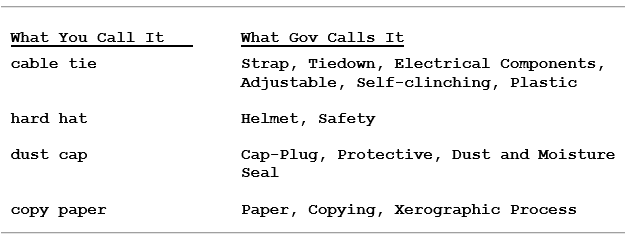
In Part 1 of this series, we looked at how identifying items correctly in your search for government solicitations and contracts can really make a difference. Now, we’ll go a bit deeper into search technique for a Bid-To-Win approach.
Many companies that sell to the government search for government solicitations on the website FedBizOpps where agencies of the Federal Government and the Department of Defense (DoD) publicly post upcoming contracts actions (i.e. solicitations and advanced notice of contracts) expected to exceed $250,000 in value.
Frequently, individuals searching for contracting opportunities on FedBizOpps are not searching as efficiently as they can. This can become very time-consuming and costly as FedBizOpps posts, on average, 7,000 new opportunities weekly, covering the FULL range of products and services purchased by the government.
At BidLink.net we’ve helped tens of thousands of government contractors and suppliers improve their Bid-To-Win ratio. Over the years we’ve had many conversations with beginner to experienced government suppliers that indicate room for improvement in how they search for contract opportunities.
To illustrate some of the issues we’ve found that can interfere with efficient searching, here is made-up conversation of the type we often have with new users of our system:
BidLink.net — What type of product does your company manufacture or sell?
User — We make injection molded parts and can do rotomolding as well.
BidLink.net — Can you be more specific? Maybe if you give me the names of some of the items that you produce I can show you how to find open solicitations.
User — Oh, we sell things like dust caps, plastic parts, plastic cases and equipment cases. I know my competitors sell them to the government, but I can’t find any bids or DoD contracts for them.
BidLink.net — Well, how do you currently search for past sales and open government solicitations for the items that interest you?
User — We search fbo.gov for “injection molded parts,” the NAICS code 326199 and for names like “dust caps.” I keep on getting no results, or just lots of stuff unrelated to what we sell.
At this point, it’s clear to us where the problem lies. Fortunately, it’s one that’s easy to solve. But before we do so, let’s review what’s going wrong in this User’s searches.
As a general rule, the government buys things, not processes. In the above example, “injection molding,” is a manufacturing process. When a solicitation or contract award is posted by the government, the manufacturing process for the item is rarely mentioned. So, don’t search for government business opportunities by industrial capability or manufacturing process.
Another related point is that NAICS codes (the North American Industry Classification System), is far too broad a descriptor to be used for highlighting the SPECIFIC ITEMS that YOU sell. In the above example (of a manufacturer / supplier of dust caps and plastic parts) the applicable NAICS is 326199 (“All Other Plastics Product Manufacturing”). Yes, their NAICS code is correct for what they make and sell, but No, they’re not going to zero-in on government opportunities for their specific products by searching under this broad NAICS code — that search will return far too many results to be manageable.
In the above example, after a couple of minutes of research in BidLink.net, we found the item description that pointed to what we all call “dust caps.” These, in turn, pointed to over 100 open solicitations for dust caps — one supplier has recently sold 55,231 dust caps under a single contract. The correct identification is: “Cap-Plug, Protective, Dust and Moisture Seal.”
So, here are the general steps you can use to quickly search for realistic government business opportunities for your company. This method involves following the path your competitors already use to obtain their government business.
Before long, you should be receiving in your Inbox all the same solicitations that your competitors are bidding on and winning as they build their government contracting business.
We believe that there’s no better tool than BidLink.net for consolidating this type work. You can see for yourself with a free trial. Along with your trial, we’ll be happy to suggest further improvements to your search technique and workflow that will increase your efficiency and help you develop a strong Bid-To-Win government contracting business.
—-
BidLink is a provider of DoD procurement research tools and has been a leading provider of industry marketing data relating to DoD solicitations and contracting for 18 years. Find defense contracts and research your competition. Learn more at www.bidlink.net
Tweet
Over the past 18 years we’ve helped our military and commercial customers find NSNs. Finding NSNs for a particular item can be challenging, especially when you don’t know the official name. Today’s “NSN Hints” will look at how to find NSN’s for wire markers. The above photo shows a typical wire marker in use.
The customer needed a way to mark electrical wires they were removing from an engine they were repairing. He thought that there should be some sort of “wire marker/wire label” he could apply and needed the NSN for wire markers. I explained that there may be multiple NSNs for marking wires and first we need to identify the official name.
In some cases government buyers will list common names along with the official names and NSNs listed in either solicitations or contract awards. By searching all of those documents you might find a match, that’s how I did it in BidLink. However even in places like FBO you might have a chance. But if you think like the military and search using one of the official names “Marker, Identification” – your chances will greatly improve. Once you’ve located one NSN and the technical characteristics match what you are looking for then you’ve found the NSN. The key is using the official name in all your searching.
BidLink is a provider of DoD procurement research tools and has been a leading provider of industry marketing data relating to DoD procurement and solicitations for the past 18 years. Find defense contracts and research competition. Learn more at www.bidlink.net
Tweet
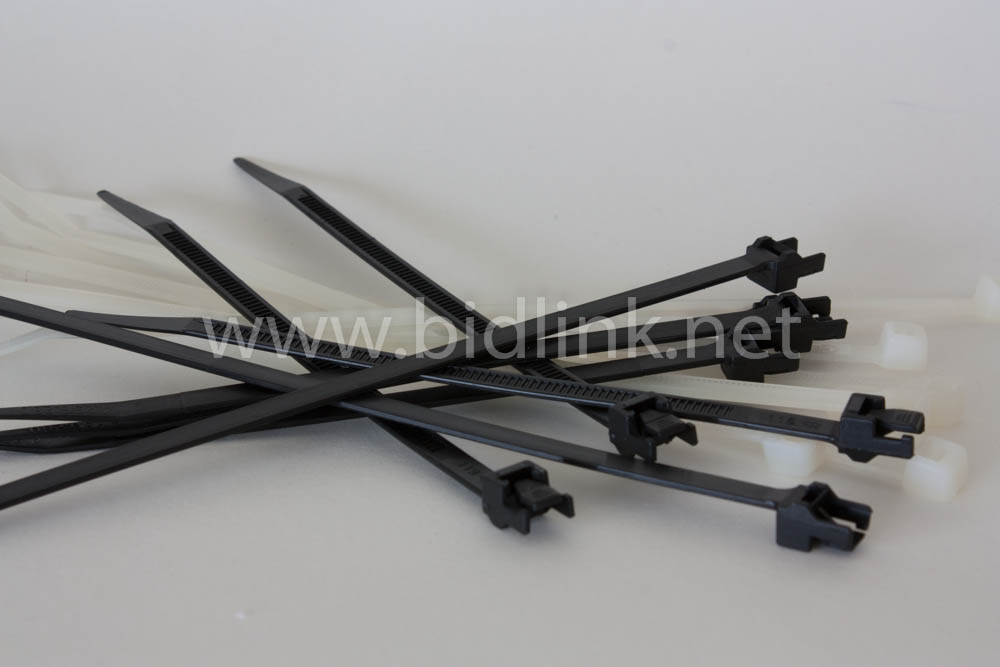
DoD and the US Military use their own language especially when it comes to naming items. When searching for manufacturers, suppliers, contracts or solicitations you need to think like they do. Each item they purchase has its own unique naming convention.
Today we quickly look at the Zip ties or cable tie. One of the official names DoD uses to describe these items is “Strap, Tiedown”. If you’re looking for either Manufacturers, Suppliers, Solicitations (MSS) use this official name and your results will be much better.
Manufacturers
A couple of manufacturers currently producing zip ties are Panduit, Cage code 06383 and Thomas & Betts Cage code 56501. Ty-rap is a trademark of Thomas & Betts.
Suppliers
One simple way to find suppliers for an NSN is:
Solicitations
This past week DoD posted solicitations for cable ties worth close to $30,000.00 and that’s just last week. When searching for government solicitations be sure to use correct nomenclature, in this case “Strap, Tiedown”. One of the cable tie NSNs open for bid is 5975-01-120-1088.
Using the correct nomenclature no matter what you’re looking for your results will improve.
BidLink is a provider of DoD procurement research tools and has been a leading provider of industry marketing data relating to DoD procurement and solicitations for the past 18 years. Find defense contracts and research competition. Learn more at www.bidlink.net
TweetEvery day the Department of Defense (DoD) posts 1000’s of solicitations for spare parts and a percentage of these solicitations go unanswered for several reason, we’ll look at two of them. NAICS size standards and lack of approved sources.
There is currently an open solicitation for push switches used with a communication headset; in fact it’s been open over a month past its original close date. Harris Corporation, stock ticker HRS is the manufacturer of the complete item and the switch is a spare part. It’s the type of headset that a crewman on a flight deck would use. The manufacturer calls the switch a “Push to Talk (PTT) switch assembly”. In addition to the open solicitation the Defense Logistics Agency (DLA) is actively searching for new manufacturers of this item NSN 5930-01-513-6693. Harris Corporation is currently the only approved source.
Source Approval Request (SAR)
When a new system is purchased by DoD the Original Equipment Manufacturer (OEM) producing the system typically provides the complete systems and all associated parts. As time goes by, parts of the system are either repaired or replaced. These parts otherwise known as “spares” are either provided by the OEM or possibly the subcontractors that actually produced the part for the OEM in the first place.
DoD system support includes reviewing prices, finding competition and seeking new sources. One becomes a new source through a process known as a Source Approval Requests or SAR.
NAICS Size Standards
DoD associates a NAICS size standard to solicitations they post, this restricts those who can submit bids. When the size standard of an OEM is larger than the size standard posted on the solicitation it basically prohibits the OEM from bidding. This is a great time for new manufacturers to become approved sources for items they’ve never produced. Many DoD systems cost Billions of dollars, are used by 1000’s of troops and remain in use for many years. Time spent becoming a new approved source for a single item can result in millions of dollars in sales for many years.
DoD is always seeking new sources and wants competition. The item mentioned above currently used by DLA has a demand quantity of 462 per year. With the current DLA acquisition costs in the $200 plus range, potential annual revenue could be over $100,000.00 per year for this item for a new manufacturer.
This situation is NOT an anomaly, I look at DoD contracts and solicitations data every day and I’m astounded how many items the government buys constantly that have only one manufacturer.
BidLink is a provider of DoD procurement research tools and has been a leading provider of industry marketing data relating to DoD procurement and solicitations for the past 18 years. Find defense contracts and research competition. Learn more at www.bidlink.net
Tweet